
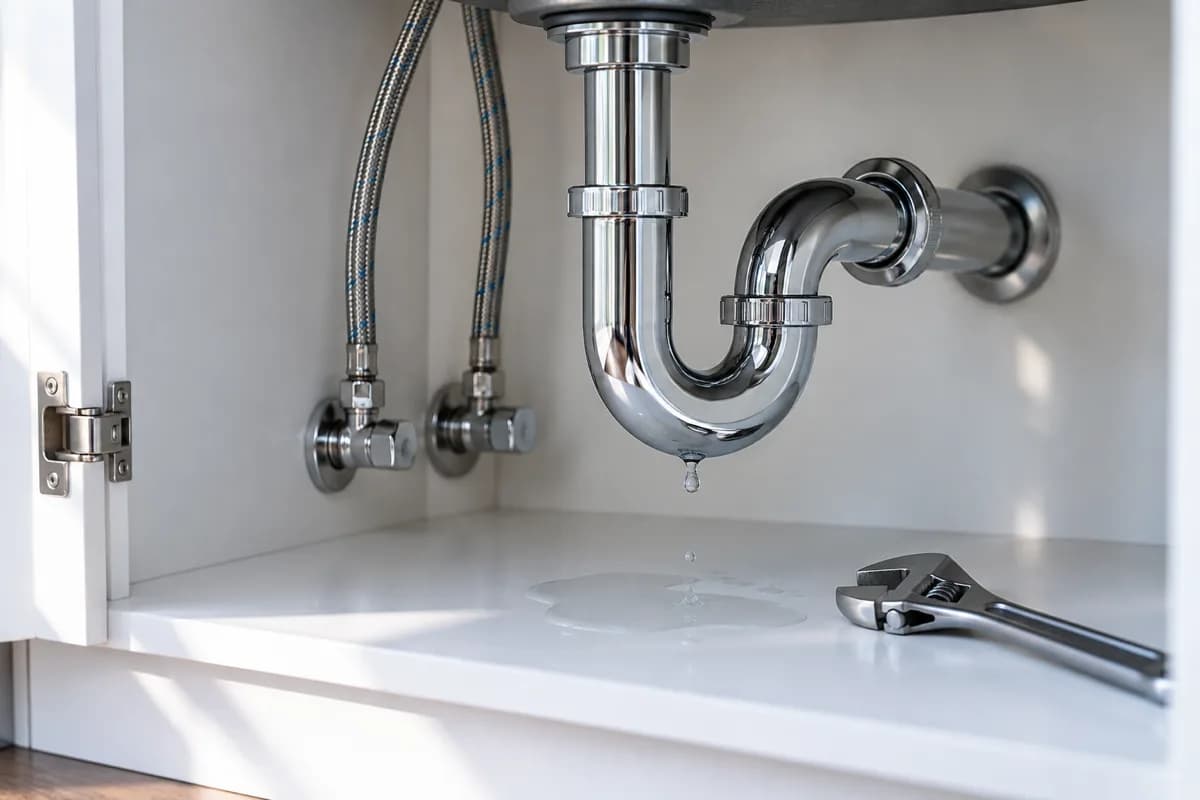
To fix a leak under your kitchen sink, find the source (faucet, drainpipe, water supply valve, supply lines, or sink strainer), tighten loose connections by hand, and replace worn parts as needed. If the leak persists or supply lines are over five years old, call a plumber.
A kitchen sink leaking in your home is a surefire way to waste water and drive up your utility bill. The longer you leave it, the worse it’ll get.
Calling a plumber is a smart idea, but while you wait for one to arrive, you can also try a few things to minimize the damage or at least contain it. PlumbWize walks you through them below, so you can limit water damage and get your sink working as intended again.
Tools You Need
A few basics will cover most of these fixes:
- Allen wrench: for removing the faucet handle
- Adjustable wrench: for tightening slip nuts, supply line connections, and mounting bolts
- Plumber’s putty: for resealing the sink strainer and garbage disposal flange
- Replacement cartridge: for cartridge-style faucets, sized to match your model.
Not every fix needs a tool. Check the table below to confirm which one applies to your leak before you start.
Common Causes of Leaks and Solutions
There are many common causes of a leaky sink, and the trick to fixing them is to figure out where the leak is coming from.
| Symptom | Likely cause | Quick fix |
| Water pooling on top of the sink, not from the spout | Faulty faucet cartridge | Disassemble the handle, replace the cartridge, seats, and springs |
| Drip under the sink when water is running | Loose drain pipe nut or gasket | Tighten slip nuts by hand and test |
| Leak continues when drain is plugged and water is running | Water supply valve failure | Tighten the supply valve; replace if lines are five years old or more |
| Water dripping from supply line connections | Loose hot or cold supply line nut | Tighten the nuts connecting lines to their cutoff valves |
| Drips under sink when water runs, droplets when not draining | Cracked putty on sink strainer | Remove strainer, reapply plumber’s putty, reinstall |
| Water drips from the curved pipe under the sink, or sewage smell from the cabinet | Worn or loose P-trap | Hand-tighten slip joint nuts on both ends; replace the P-trap if cracked. |
| Leak from the top, side, or bottom of the garbage disposal | Loose mounting bolts, cracked putty, or a filled drain hose/internal seal | Tighten and reseal if from the top; Tighten or replace the hose clamp if from the side; Call a plumber if from the bottom |
Before starting, turn off the water supply first. The shutoff valves are located under the sink, one for hot and one for cold. Turn them clockwise until they stop. Then run the faucet briefly to release any water still in the lines before you touch anything.
Afterward, you can start checking these areas:
Faucet
A leaking faucet is usually a worn cartridge. Inside the faucet handle, the cartridge and its rubber seats and springs control the flow and shutoff of water, and after enough use, those seats and springs wear down, or the cartridge itself develops small cracks, letting water seep past where it should be sealed.
You’ll know a faucet is causing the leak if water pools on the sink’s surface and comes from areas beyond the spout.
 Quick Fix: Disassemble the faucet handle and replace the cartridge, seats and springs:
- Turn off the water supply first.
- Remove the faucet handle with an Allen wrench.
- Remove the retainer nut, cartridge, seats and springs.
- Replace the cartridge, seats and springs with new ones.
Note: The fix above applies to cartridge-style faucets, the most common type in Canadian homes. If you have a ball, compression, or ceramic disc faucet, the internal components and the steps differ.
Check your faucet manufacturer’s documentation before disassembling anything.
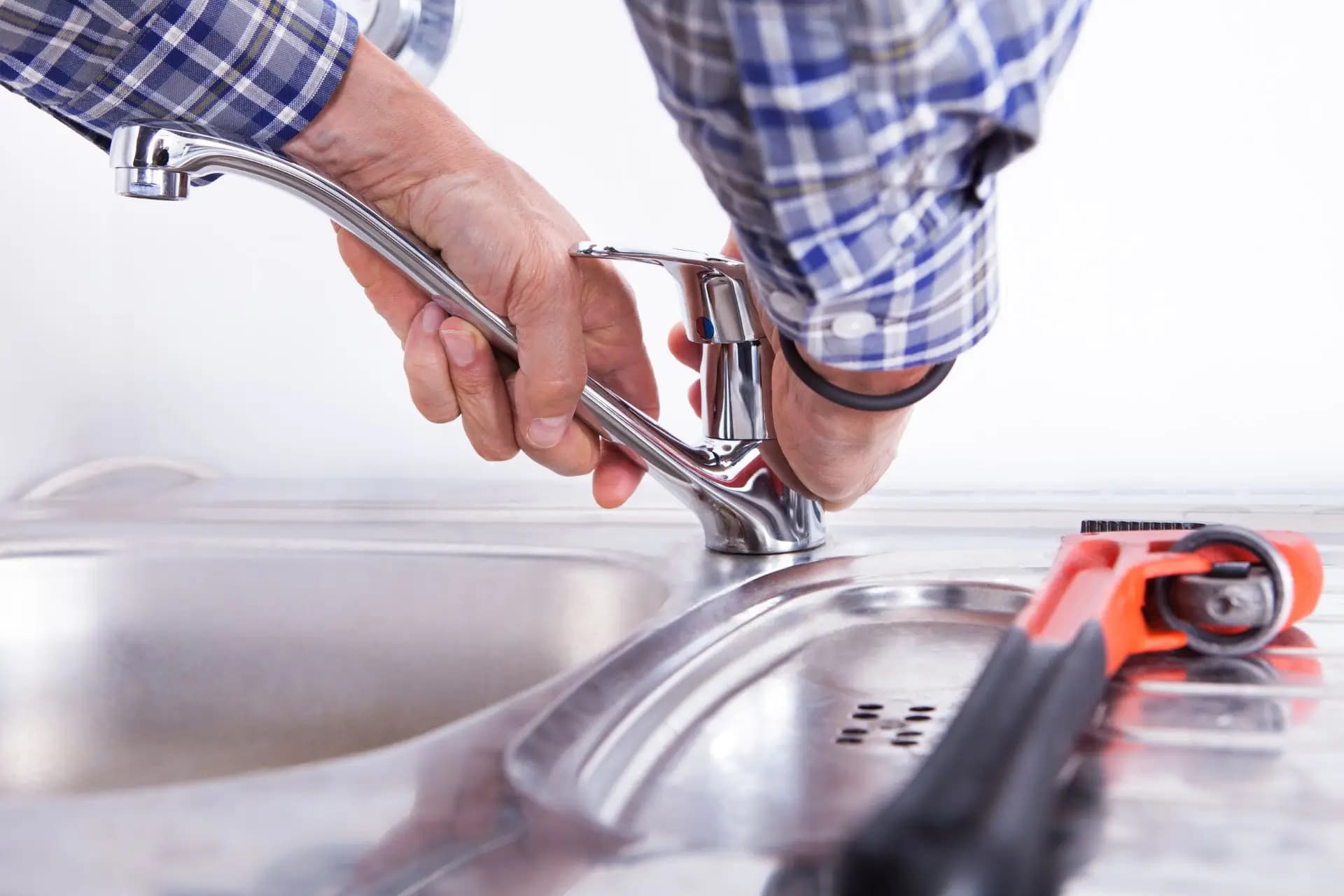
Image source: Shutterstock
Drain Pipe
If there’s a leak under your kitchen sink when the water is turned on, your drain pipe might be the problem. It could be because of a loose nut or gasket.
Quick Fix: To stop drain leaks under your kitchen sink, tighten the pipe slip nuts by hand. Run the water and see if the water still leaks.
Water Supply Valve
Water supply leaks can cause major water damage in homes if not addressed quickly.
To find out if your water supply valve is the source, plug the sink drain, turn on the faucet, and let the water run for a few seconds. This isolates the drain as a possible cause, since it can’t leak if it’s sealed.
If water still shows up under the sink with the drain plugged, the drain isn’t the source, so it’s likely your water supply valve or lines.
Quick Fix: Tighten the water supply valve and see if that stops the leak.
If this does not improve the situation, some parts might need to be replaced. That said, if your water supply lines are five years old or older, you may need to consult a professional to replace them rather than repair them.
Hot and Cold Supply Lines
Your kitchen sink’s hot and cold supply lines can also be sources of leaks. If there’s a leak under the kitchen sink when water is turned on, or drips coming directly from the supply line connections, these are likely the cause.
Quick Fix: Tighten the nuts that connect them to their cutoff valves.
Sink Strainer
Your sink strainer may be the problem if it drips from the bottom when you run water in the sink, and droplets appear when it’s not draining. This could be due to cracked putty on the sink drain.
Quick Fix: Disassemble the pipe and remove the kitchen sink drain assembly. You should then:
- Remove the remaining putty on the sink drain’s rim.
- Apply plumber’s putty on the sink drain and place it back into the drain hole.
- Lock the basket strainer with a nut underneath the sink.
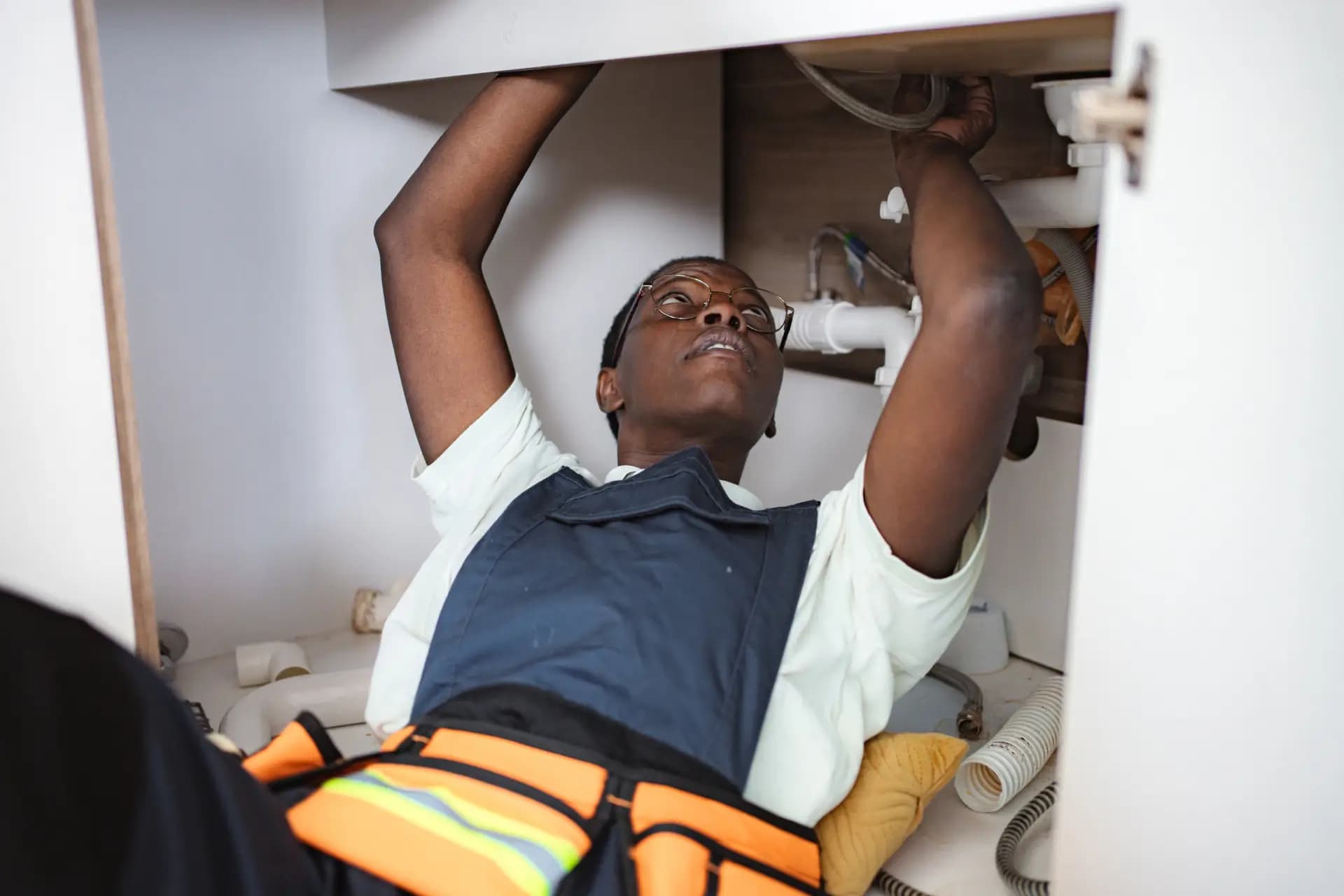
Image source: Canva
P-Trap
A P-trap usually leaks for one of a few reasons: the slip joint nuts have loosened over time, the rubber washers or gaskets inside them have dried out and worn down, or the pipe itself has corroded or cracked with age.
On older metal traps, corrosion is the most common culprit; on newer PVC traps, it’s more often a nut that was never tightened enough to begin with.
You’ll know the P-trap is the problem if water drips from the curved section of pipe under the sink when you run the water, or if you notice a sewage smell coming from the cabinet, which usually means the trap has dried out or lost its seal.
Quick Fix: Hand-tighten the slip joint nuts on both ends of the P-trap and run the water to test. If the pipe is cracked or the gaskets are worn, replace the P-trap entirely.
Garbage Disposal
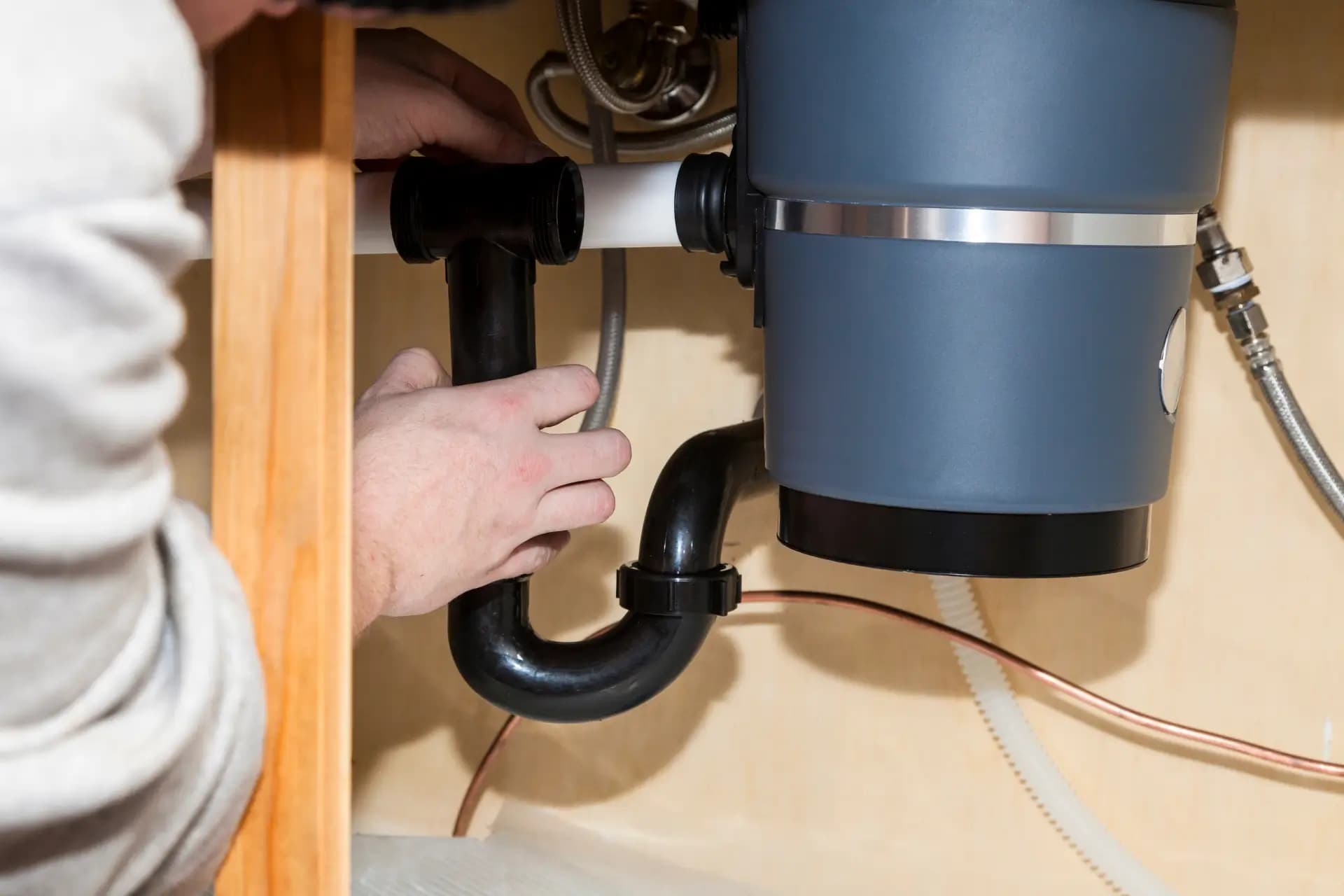
A leaking garbage disposal usually comes down to one of three things: the mounting bolts holding it to the sink flange have loosened over time, the putty seal around the flange has dried out and cracked, or the internal seals inside the unit have worn out from age and regular use.
Where the leak shows up tells you which one it is.
- A leak from the top usually means the mounting bolts have loosened or the plumber’s putty around the flange has deteriorated.
- A side leak points to a loose or cracked drain hose connection.
- A bottom leak means the internal seals are gone, which typically means the unit needs to be replaced rather than repaired.
Quick Fix: Tighten the mounting bolts on the sink flange and reseal with plumber’s putty if water is coming from the top. For a side leak, tighten or replace the drain hose clamp. If the leak is from the bottom, call a plumber.
Source: Canva
When to Call a Professional Plumber
Call a plumber if the leak persists after you’ve tightened connections, if it’s coming from the water supply valve, or if your supply lines are five or more years old. The same goes for any leak you can’t find the source of, or one that’s already caused visible water damage to the cabinet floor.
Your home’s plumbing system can get complicated fast, and poking around without much experience can turn a small leak into a bigger repair. Some leaks also aren’t accessible without professional tools. When that’s the case, the best solution is to call a plumber.
FAQs About Kitchen Sink Leaks
Why is my kitchen sink leaking when the water is on?
How do I stop a leak under my kitchen sink?
Can I fix a kitchen sink leak myself?
How much does it cost to fix a kitchen sink leak?
In Summary
- Turn off the shut-off valves under the sink first, and run the faucet briefly to clear the lines.
- Common causes: faucet, drain pipe, water supply valve, supply lines, sink strainer, P-trap, and garbage disposal.
- Tightening loose nuts and connections by hand resolves most minor leaks.
- To check the supply valve, plug the drain and run the water. If it still leaks, the drain isn’t the cause.
- Call a plumber if a leak persists after tightening, involves the supply valve, or your supply lines are five or more years old.
Kitchen Sink Leaking? Call Your Local Plumber
If DIY solutions aren’t cutting it, PlumbWize has been fixing kitchen sink leaks for homeowners across Hamilton, Burlington, Oakville, Milton, Ancaster, and Stoney Creek for more than 60 years.
We know our way around faucets, drain pipes, sink basins, and supply line issues, and we back it up with 24/7 emergency plumbing for whenever a leak can’t wait.
If your kitchen sink is leaking and tightening it hasn’t fixed it, contact us for a permanent solution.