
Identification guide
Types of Drain Worms: An Identification Guide With Pictures

Drain worms is the everyday name for the small, worm-like creatures people find in sinks, showers, tubs, floor drains and toilets. Most are not worms at all but fly larvae, and the most common by far are drain fly larvae, which feed on the slime inside drains.[1] A few are true worms that wandered in from outside or came out of an insect.
Few of them can hurt you. What matters is what each one says about your plumbing: most mean a drain needs cleaning, and a few can point to a leak or a broken pipe. Find yours in the key below, then jump to its section. If you already know you have drain fly larvae, our guide on how to get rid of drain worms walks through the clean-up.
Quick identification
Match what you see to the closest row. Sizes and colours are clues, not a diagnosis, so read the section before you decide.
| What you see | Most likely | Plumbing problem? |
|---|---|---|
| Several small grey worms, darker at both ends, in a sink, tub or shower drain | Drain fly larvae | Usually cleaning; if they keep coming back, a hidden leak |
| Many tiny humpbacked flies that run in bursts, mostly on the lowest floor | Phorid fly larvae | Possibly a broken pipe under the floor |
| Tiny white maggots in a kitchen drain or disposal, fruit flies nearby | Fruit fly larvae | A slow or seldom-used drain |
| One long, hair-thin, dark worm, often knotted | Horsehair worm | No |
| A pink, red or brown ringed worm in a ground-floor toilet or floor drain | Earthworm | Worth checking if it keeps happening |
| Thin bright red larvae coming out of the tap | Bloodworms | A water supply question |
| A plump white maggot with a long thin tail, near dirty standing water | Rat-tailed maggot | Only if there is sewage indoors |
| Clear larvae with shiny black heads in plant soil | Fungus gnat larvae | No |
| Something with legs: a millipede, house centipede or silverfish | Not a worm | Damp; a centipede near a floor drain can mean a dry trap |
| Tiny white threads in or on stool | Pinworms | No. See a doctor |
Drain fly larvae
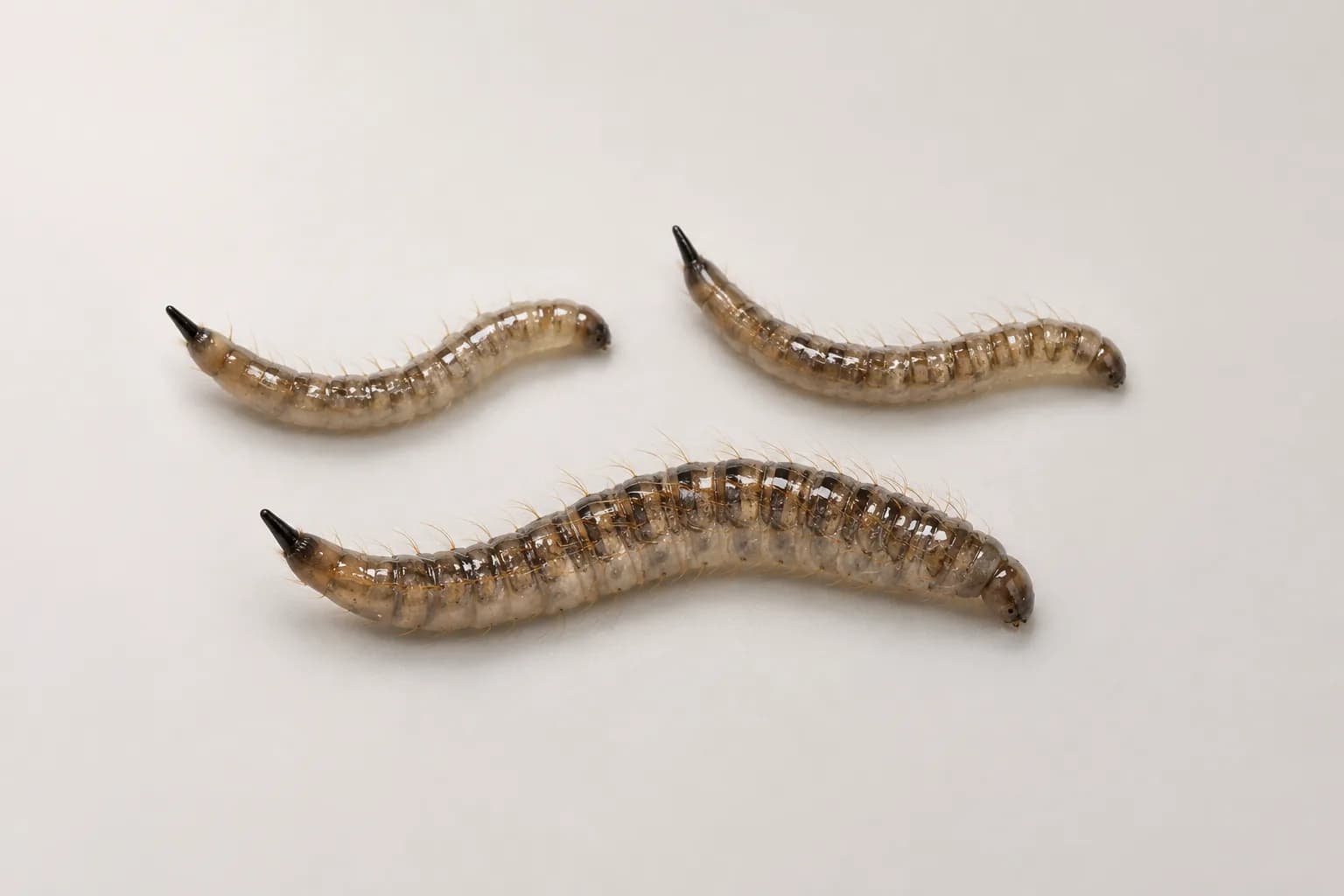
| Also called | Moth fly, sewer fly or filter fly larvae |
|---|---|
| Scientific name | Clogmia albipunctata and Psychoda species (family Psychodidae) |
| Size | About 8 to 10 mm |
| Colour | Grey, darker at both ends, with dark bands across the back |
| Found in | Sink, tub, shower, floor and overflow drains; under a toilet rim |
| Harmful to people? | No bites or stings; a nuisance |
| Plumbing problem? | Usually a dirty or slow drain. If they keep coming back, a hidden leak or broken pipe |
How to identify them
These are the worms most people mean when they say “drain worms.” They are legless, slim and grey, about 8 to 10 mm long, darker at both ends, with a breathing tube at the tail end.[1] Look closely and you will see a row of dark bands across the back.[2]
They grow up into drain flies: small, fuzzy grey flies that hold their wings like a tiny moth and rest on bathroom walls.
Where they come from
The larvae live in the slimy film that builds up inside drains and feed on the bacteria, fungi, grease and gunk in it.[1][3] Common spots are bathroom, kitchen and laundry drains and traps, the overflow holes in sinks and tubs, and shower drains. Adults also lay eggs under toilet rims, and a leak at the base of a toilet can be a breeding spot too.[1]
Egg to adult takes about one to three weeks, depending on how warm it is.[1][2] That is why a drain you clean once can be busy again a couple of weeks later.
Are they harmful?
Not really. Drain flies do not bite or sting and are not known to spread disease, but they can carry germs from a dirty drain onto counters, and large numbers can bother people with allergies or asthma.[1][4]
What they mean for your plumbing
Most of the time it is a cleaning job. Adult drain flies in the home usually point to a slow or clogged drain that needs cleaning.[1]
If they keep coming back after a proper clean, the slime they live in may be somewhere you cannot reach: a leaking pipe behind a wall or shower, a leaking toilet base, or a broken drain pipe under a concrete floor or in a crawl space.[1][5]
What to do
- Find the drain. Put clear tape over the opening, sticky side down, with a small gap for air, and check it over the next few days. Flies stuck to the tape show you which drain they are coming from.[1][3]
- Take out the stopper or strainer and scrub the drain opening, the overflow and as far down the pipe as you can reach with a stiff drain brush. The slime is what has to go.[3][5]
- Follow up with an enzyme or bacterial drain cleaner, which digests what the brush missed.[3][1]
- Skip bleach and boiling water. The larvae shelter inside the slime, so these usually do not reach them, and harsh treatments can damage the pipe.[1][5]
- Run water in drains you rarely use, and fix slow drains and drips.[1]
Phorid fly larvae
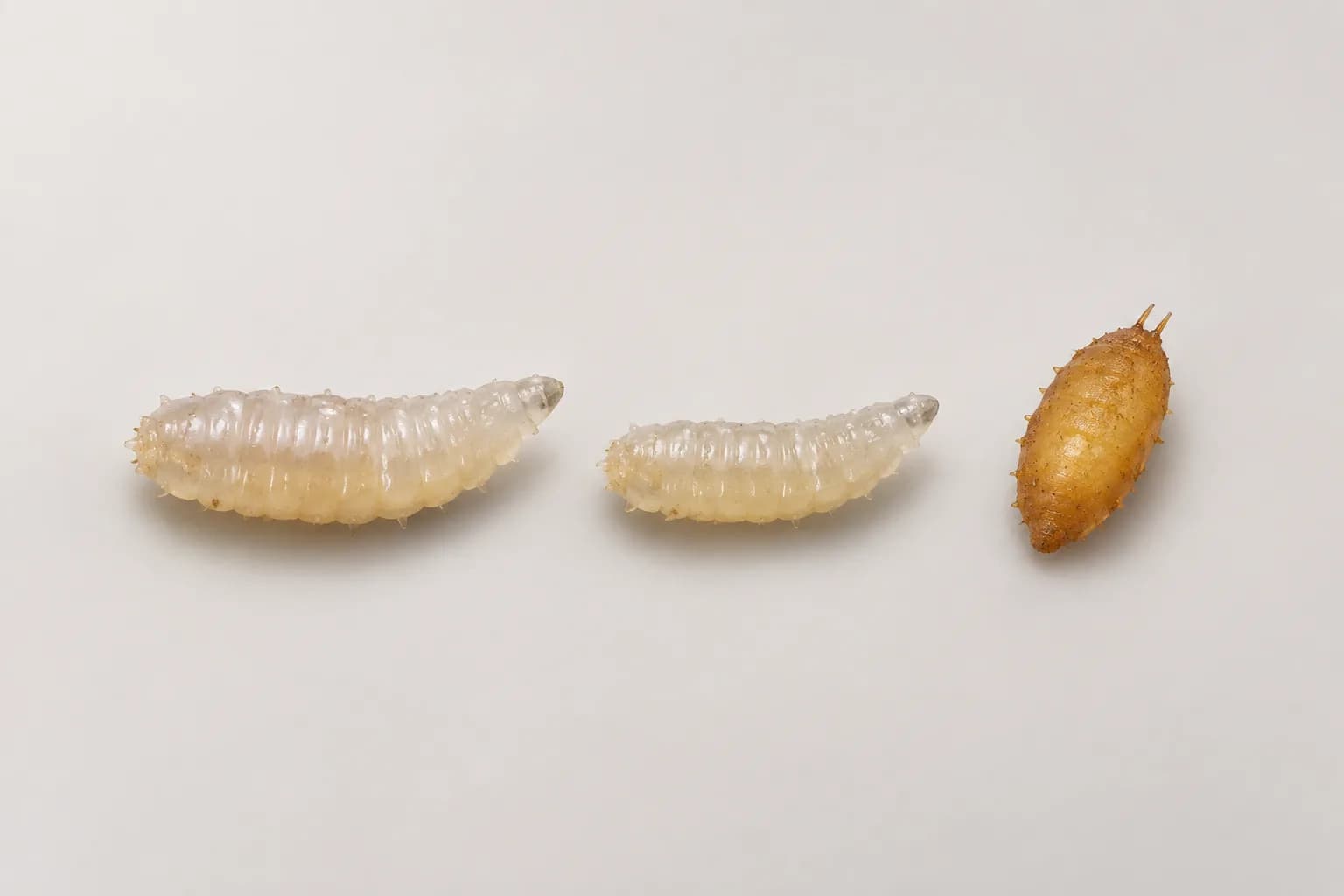
| Also called | Humpbacked fly or scuttle fly larvae |
|---|---|
| Scientific name | Megaselia scalaris and related species (family Phoridae) |
| Size | Up to about 10 mm |
| Colour | White, yellow-white or grey |
| Found in | Drain pipe linings, garbage disposals, rotting food; soil under a slab where a sewer pipe leaks |
| Harmful to people? | Mainly a nuisance |
| Plumbing problem? | Large numbers on the lowest floor can mean a broken drain or sewer pipe under the floor |
How to identify them
Phorid larvae are small, white to grey maggots up to about 10 mm long, and you rarely see them. The adults give them away: tiny humpbacked flies that tend to run across a surface in short bursts instead of flying off. Their pupae are about 4 mm, oval and a little flat, with two small breathing horns.[6][7]
Where they come from
They breed in moist, rotting material: the slime lining drain pipes, garbage disposals, trash cans, food under appliances, dirty mops and forgotten potatoes or onions.[6] When a drain or sewer pipe breaks under a basement floor or slab, sewage soaks into the soil underneath, and phorid flies can breed there in large numbers.[7]
Are they harmful?
Mostly a nuisance. Adults do not bite. Like other flies, they can carry bacteria from where they breed onto food and counters.[6]
What they mean for your plumbing
Of all the drain worms, this one is the strongest hint of a broken pipe. Very large numbers of phorid flies on the first floor may mean a broken drain or sewer line under the house.[8] Rule out the simple sources first, though, because rotting food and dirty drains are far more common.[6]
What to do
Check the kitchen first: stored produce, under the fridge and stove, the garbage and the mop. Then tape over drains to see which one the flies come from, and scrub the drains you find. Do not pour bleach down the drain. It will not kill the larvae and can react with other chemicals in the pipes.[6][7]
If they keep coming in large numbers, especially near basement floor cracks or a floor drain, ask a plumber for a drain camera inspection. NC State Extension recommends a camera or smoke test of the drain lines to look for a break.[6]
Fruit fly larvae
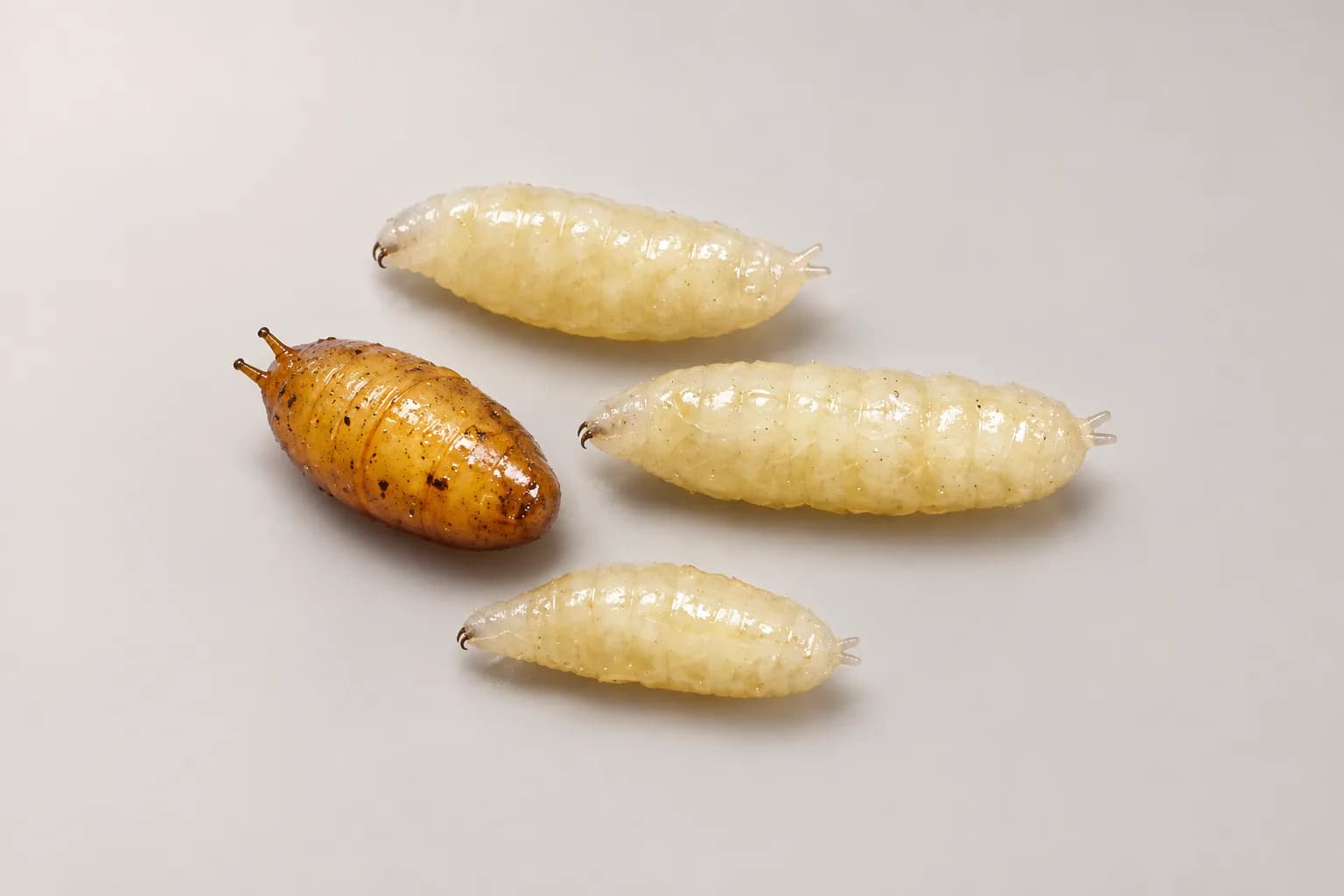
| Also called | Vinegar fly or pomace fly larvae |
|---|---|
| Scientific name | Drosophila species (family Drosophilidae) |
| Size | About 2 to 3 mm |
| Colour | White to pale orange, see-through |
| Found in | Kitchen drains, garbage disposals, recycling, overripe fruit |
| Harmful to people? | A nuisance; can spread bacteria to food |
| Plumbing problem? | A slow or seldom-used drain with slime in it |
How to identify them
Fruit fly larvae are tiny, only 2 to 3 mm, pale and see-through, with dark mouthparts at the pointed end and a small forked breathing tube at the back.[9] The adults are the familiar small flies with red eyes that hover over the fruit bowl.[10]
Where they come from
Fruit flies need only a moist film of fermenting food, so besides overripe fruit they breed in drains, garbage disposals, empty bottles, recycling bins, mops and rags.[10] In a home, the most likely drain is a slow or seldom-used sink, tub, shower or floor drain with slime built up above the water line.[11] Egg to adult can take about a week.[10]
Are they harmful?
Mainly a nuisance, but they can carry bacteria onto food.[10]
What they mean for your plumbing
A cleaning job: slime in a drain that does not get enough use or drains slowly. A dripping pipe that keeps an area wet can also become a breeding spot.[11]
What to do
Tape a clear plastic bag over the drain or disposal overnight to see if flies come out.[10] Scrub the inside of the drain with a stiff brush or use a bacterial drain treatment. Bleach and ammonia do not help.[11] Clear out ripe produce and rinse the recycling. If the drain stays slow, see our guide on how to fix a slow drain.
Horsehair worms
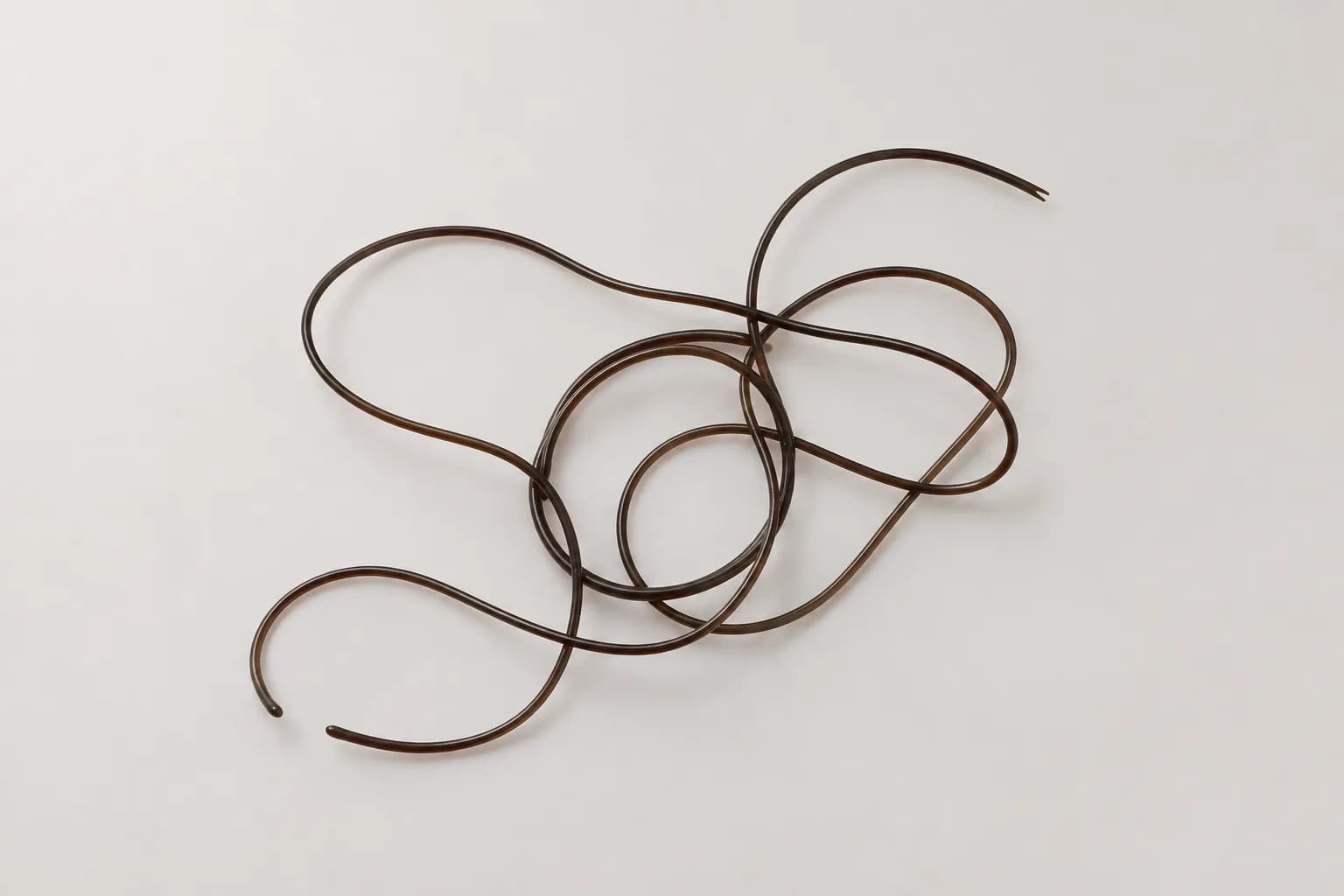
| Also called | Gordian worms |
|---|---|
| Scientific name | Phylum Nematomorpha |
| Size | Often 20 to 30 cm long, about 1 mm thick |
| Colour | Off-white when new, darkening to brown or nearly black |
| Found in | Toilets, sinks, tubs and shower stalls |
| Harmful to people? | No |
| Plumbing problem? | No. It came out of an insect |
How to identify them
One very long, very thin worm, like a strand of hair from a horse's tail, often 20 to 30 cm long and about 1 mm wide.[12] It writhes slowly and often twists itself into a loose knot. Brown to blackish is typical.[13]
Where they come from
Young horsehair worms grow inside crickets, grasshoppers, cockroaches and beetles. When the worm is ready, the insect is driven to look for water, and the adult worm leaves its body there. An infected cricket that wanders indoors can end up in a sink or toilet, which is where people find the worm.[14] Finding one in a shower stall or toilet is not unusual.[13]
What they mean for your plumbing
Nothing. The worm came from an insect, not from your pipes. The real clue is that crickets or other insects are getting indoors.
What to do
Flush it or throw it out, then seal the gaps where crickets get in. No spray is needed.[13]
Earthworms and other segmented worms
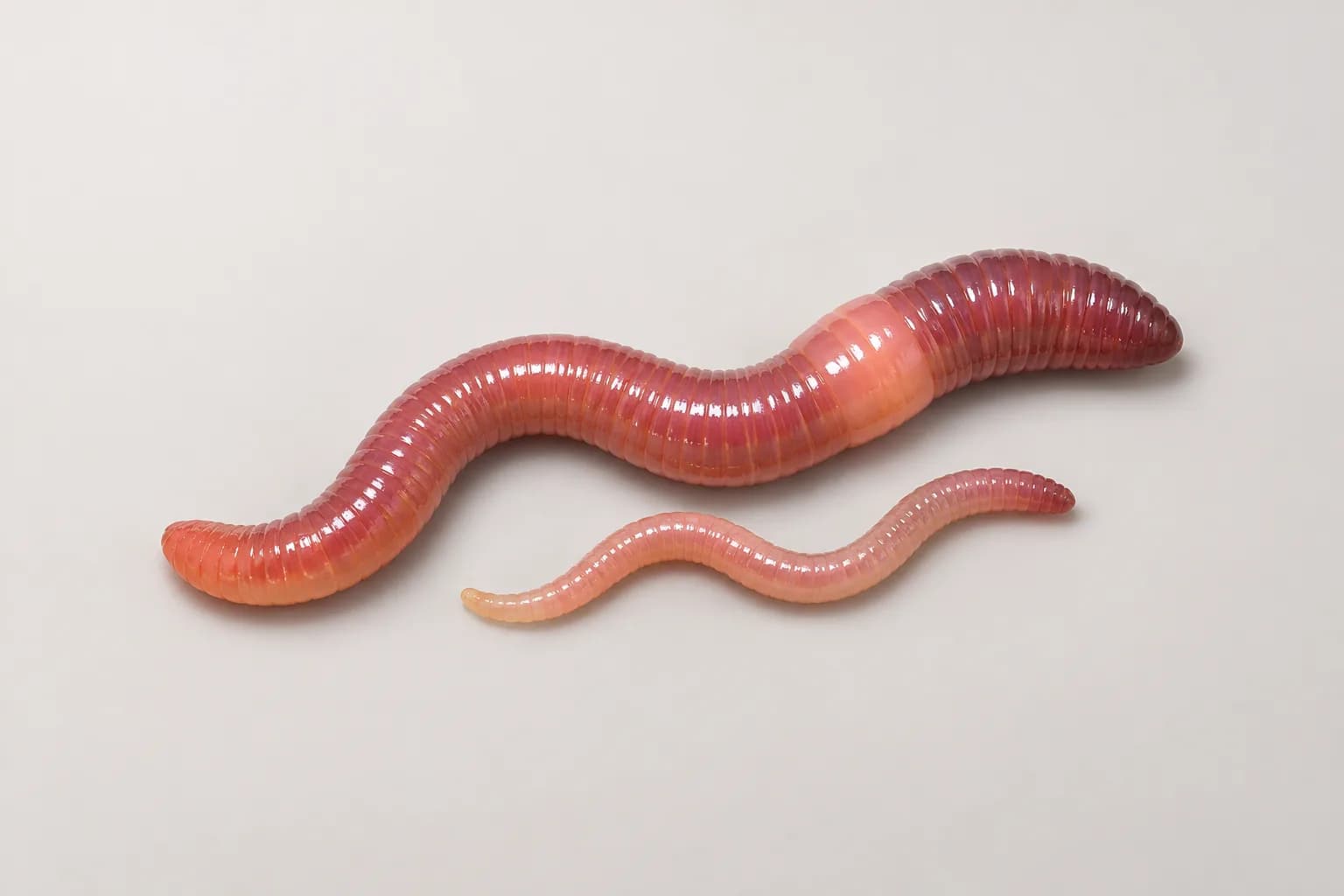
| Also called | Red worms; segmented or oligochaete worms |
|---|---|
| Scientific name | Class Clitellata, for example Lumbricidae |
| Size | From a few centimetres up |
| Colour | Pink, red or brown, clearly ringed |
| Found in | Ground-floor toilets; soil around the house |
| Harmful to people? | No |
| Plumbing problem? | Worth checking if it keeps happening |
How to identify them
Earthworms and their relatives have soft bodies made of many rings, with tiny bristles you need a magnifier to see. Small young earthworms are pale and easy to mistake for other worms.[14] In one published case, the worms a woman kept finding in her toilet were blood-red, 25 to 35 mm long and 1 to 2 mm wide, and turned out to be earthworm-type worms.[15]
Where they come from
Earthworms live in soil, so finding one indoors means it got in from outside. One can fall in from a window, a plant or someone's shoe. In the published case, the worms turned up again and again in a ground-floor toilet over six months, mostly in summer, and the doctors who wrote it up thought they came up from the soil through the drain pipe.[15] That was their best explanation, not a proven route.
Are they harmful?
No. Earthworms are not parasites of people.[15]
What they mean for your plumbing
One worm, once, is nothing to worry about. Worms or soil that keep appearing in a lowest-floor toilet or floor drain are worth a look. Possible causes include a cracked or open drain pipe letting soil in, a floor drain whose trap has dried out, or water backing up during heavy rain. A plumber can confirm which with a camera inspection.
What to do
Remove it and flush or toss it. Pour water into floor drains you rarely use so the trap stays full. Call a plumber if worms or soil keep showing up, the floor drain backs up in heavy rain, or you smell sewage. Our guide on preventing a sewer backup covers the warning signs.
Bloodworms (midge larvae)
| Also called | Midge larvae |
|---|---|
| Scientific name | Family Chironomidae, often Chironomus |
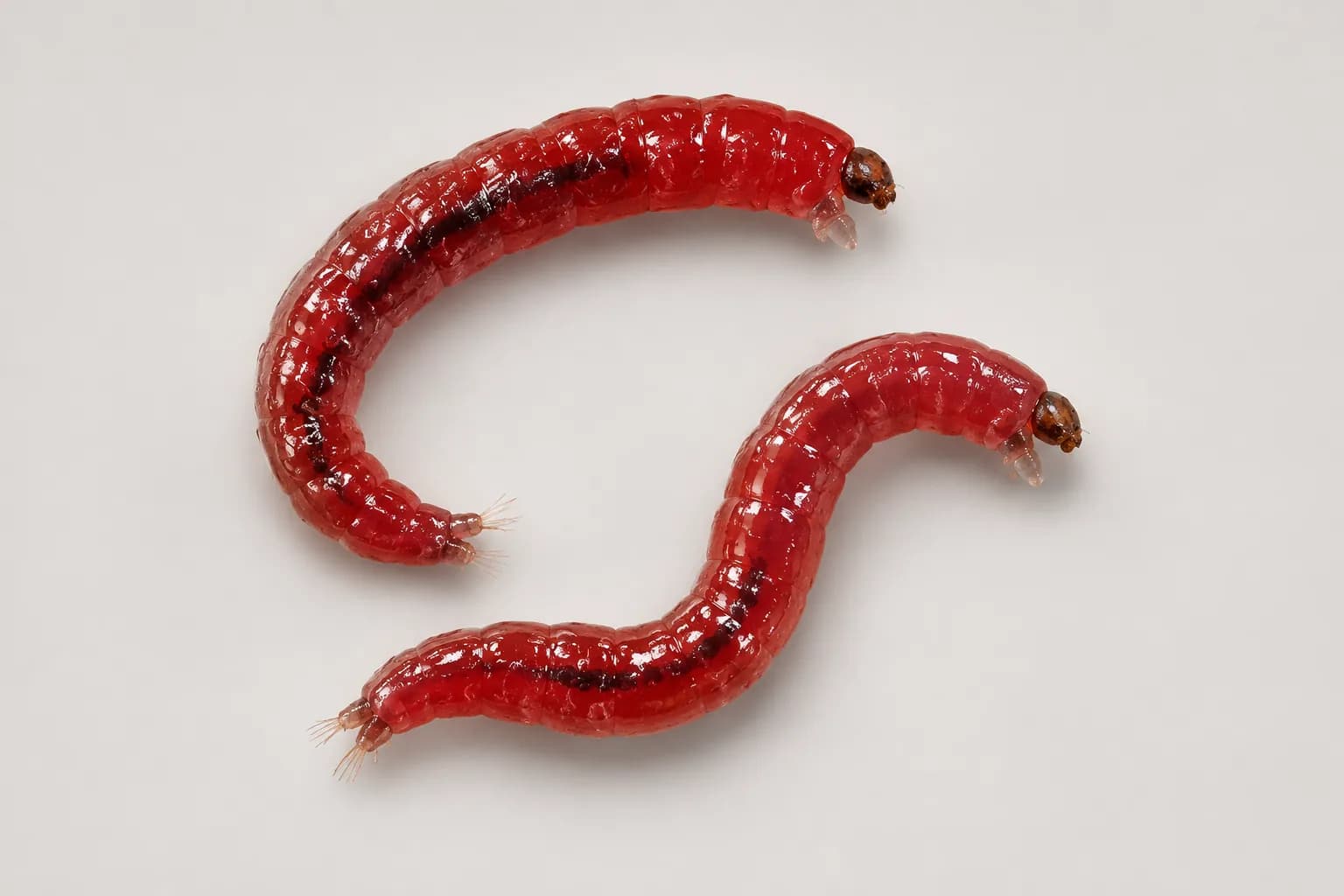
| Colour | Bright red or pink; other kinds are pale or green |
| Found in | Ponds, lakes and still water; rarely, the household water supply |
| Harmful to people? | No |
| Plumbing problem? | From the tap, it is a water supply question, not a drain problem |
How to identify them
Bloodworms are the larvae of non-biting midges. They are thin, segmented and worm-like, with a small head. The red ones get their colour from haemoglobin, which lets them live in water with very little oxygen.[16][17]
Where they come from
They live in the mud of ponds, lakes, streams and stormwater ponds.[16] The documented way they reach a home is through the drinking water supply: researchers have followed one midge species breeding inside a city's water pipes.[18]
Red worms in a toilet are often blamed on bloodworms, but we could not find an authoritative source showing they breed in household drains or toilets. Red worms in a toilet can also be earthworm-type worms, as in the case described under earthworms.[15]
Are they harmful?
No. Midges do not bite or spread disease.[16]
What they mean for your plumbing
If red larvae come out of a tap or collect in a faucet aerator, that is a question for your water provider, not a drain problem. If you only see them in a toilet bowl, catch one in a clear jar and note where you found it. That makes it much easier to tell a bloodworm from an earthworm-type worm.
What to do
Clean the bowl and tank, and flush toilets that sit unused. Report worms from the tap to your water provider: Halton Region in Burlington and Oakville, or the City of Hamilton.
Rat-tailed maggots
| Also called | Drone fly larvae |
|---|---|
| Scientific name | Eristalis tenax (family Syrphidae) |
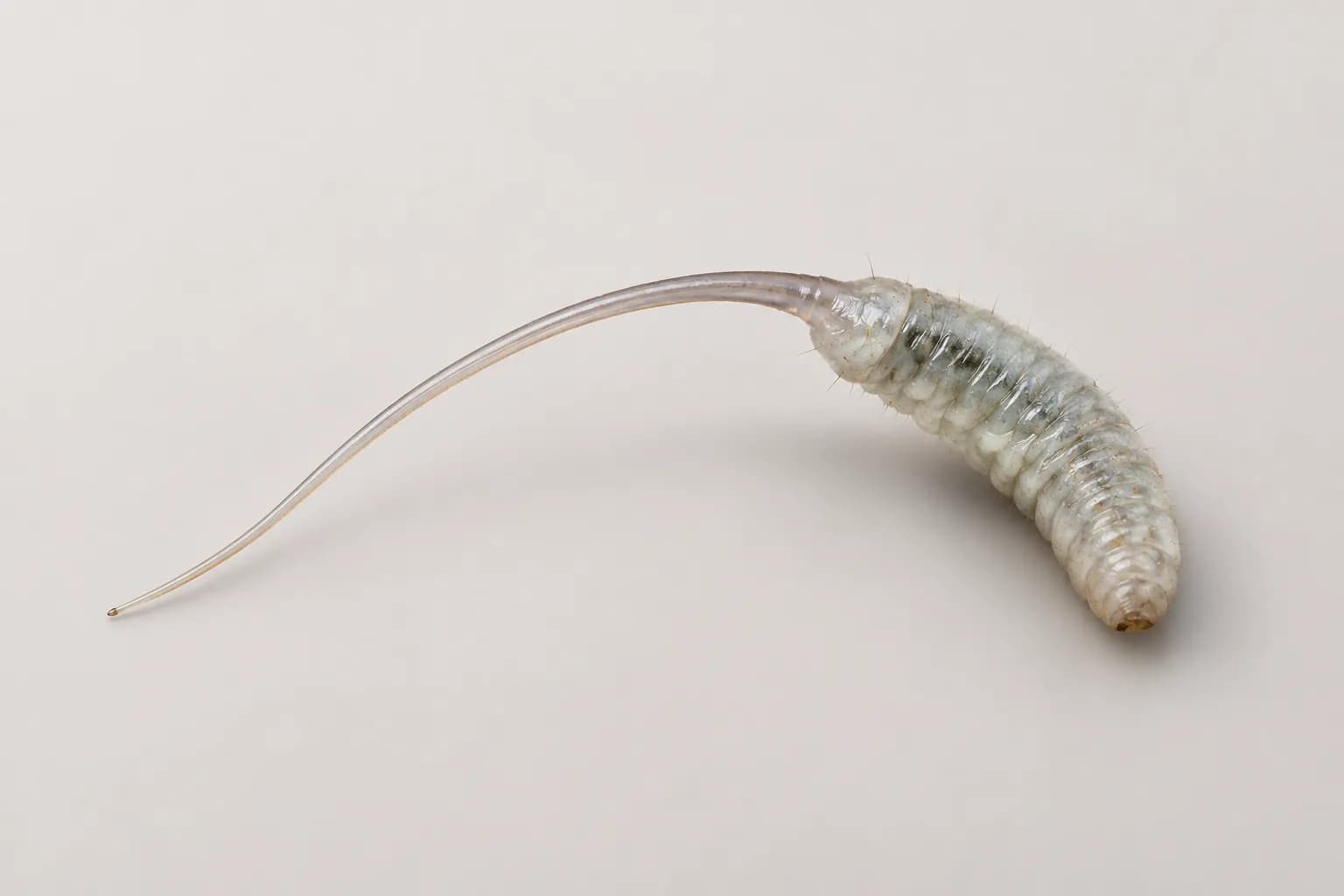
| Size | About 19 mm, plus a tail about 13 mm or longer |
| Colour | Greyish white |
| Found in | Stagnant, dirty water: manure, sewage, neglected rain barrels |
| Harmful to people? | No |
| Plumbing problem? | Only if they come from standing sewage indoors |
How to identify them
Hard to mistake: a plump, whitish maggot about 19 mm long with a thin “tail” about 13 mm long that it uses as a snorkel.[2] The tail can stretch to several times the length of the body.[19]
Where they come from
They live in shallow, stagnant water full of rotting matter, such as manure pits, sewage and polluted water. People usually notice them when the grown larvae crawl away from the water to find a dry place to turn into flies.[2][19] We found no authoritative report of them living inside household drains or toilets, so treat them as an outdoor find, around a neglected rain barrel or a blocked outdoor drain.
Are they harmful?
The wandering larvae are harmless, and the adult drone flies do not bite or sting.[2]
What they mean for your plumbing
Outdoors, a source of dirty standing water nearby. Indoors, they would point to standing sewage, such as a backed-up floor drain or sump pit, which needs a plumber either way.
What to do
Sweep them up and find and empty the dirty water they came from. Sprays work poorly on them.[2] If there is sewage indoors, call a plumber about a sewer backup.
Fungus gnat larvae
| Also called | Dark-winged fungus gnat larvae |
|---|---|
| Scientific name | Family Sciaridae |
| Size | Up to about 6 mm |
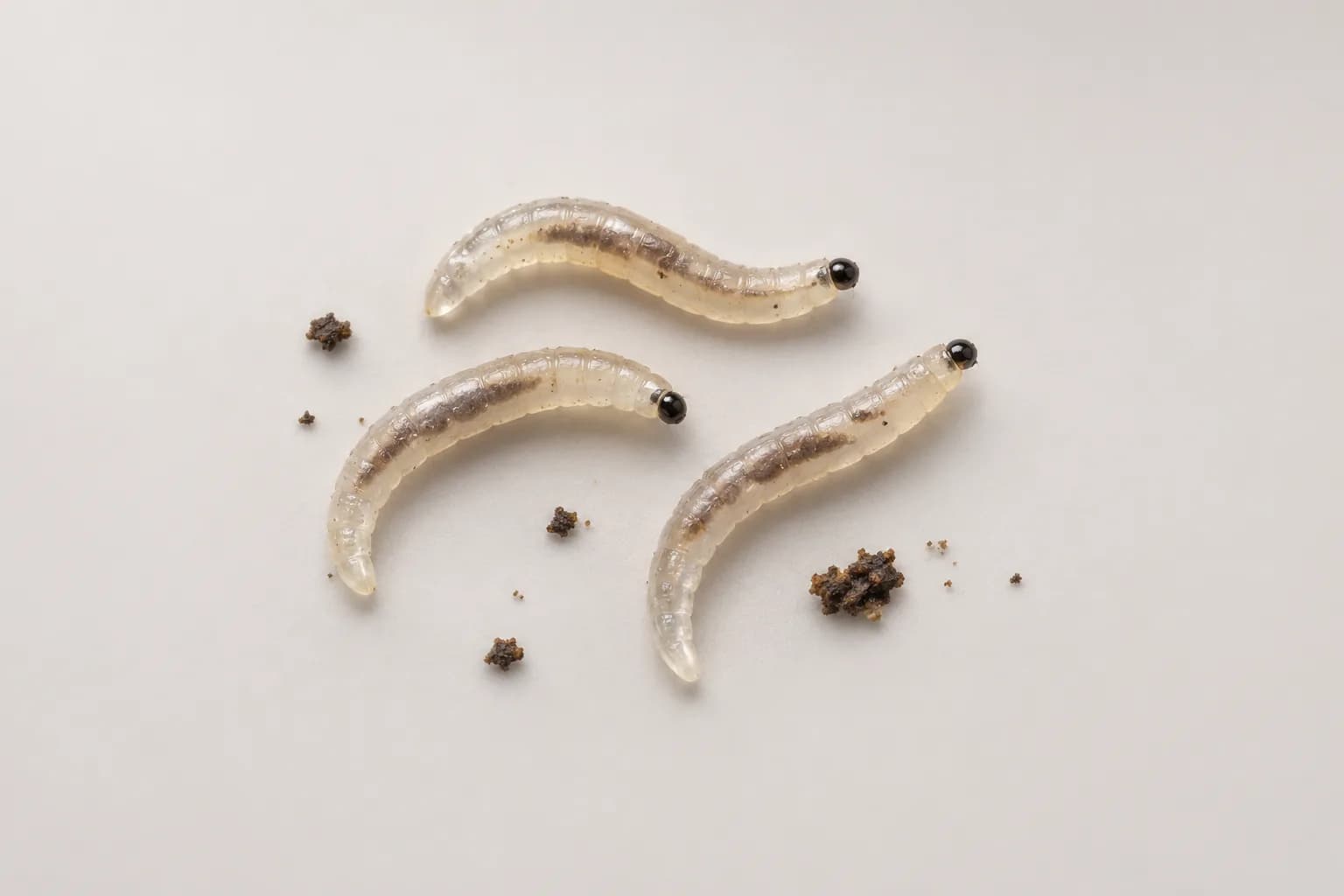
| Colour | Clear to whitish, with a shiny black head |
| Found in | Houseplant soil, compost, mulch |
| Harmful to people? | No; they can damage plant roots |
| Plumbing problem? | No |
How to identify them
Fungus gnat larvae are legless, up to about 6 mm long, with a clear to whitish body and a shiny black head.[20][21] That black head is the quickest way to tell them from drain fly larvae, which are grey with a dark breathing tube at the tail.
Where they come from
They live in damp potting soil, compost and mulch, not in drains.[20] They are on this list because the small dark adults gather on windows near houseplants and get mistaken for drain flies.
Are they harmful?
Adults do not bite. In large numbers the larvae can damage the roots of seedlings and houseplants.[20]
What they mean for your plumbing
Nothing, unless a leak is keeping soil or debris wet.[20]
What to do
Let the top of the soil dry out between waterings and use yellow sticky traps for the adults.[20]
Lookalikes with legs
Anything with legs is not a worm. These three turn up around drains and damp basements and get called worms all the time.
Millipedes
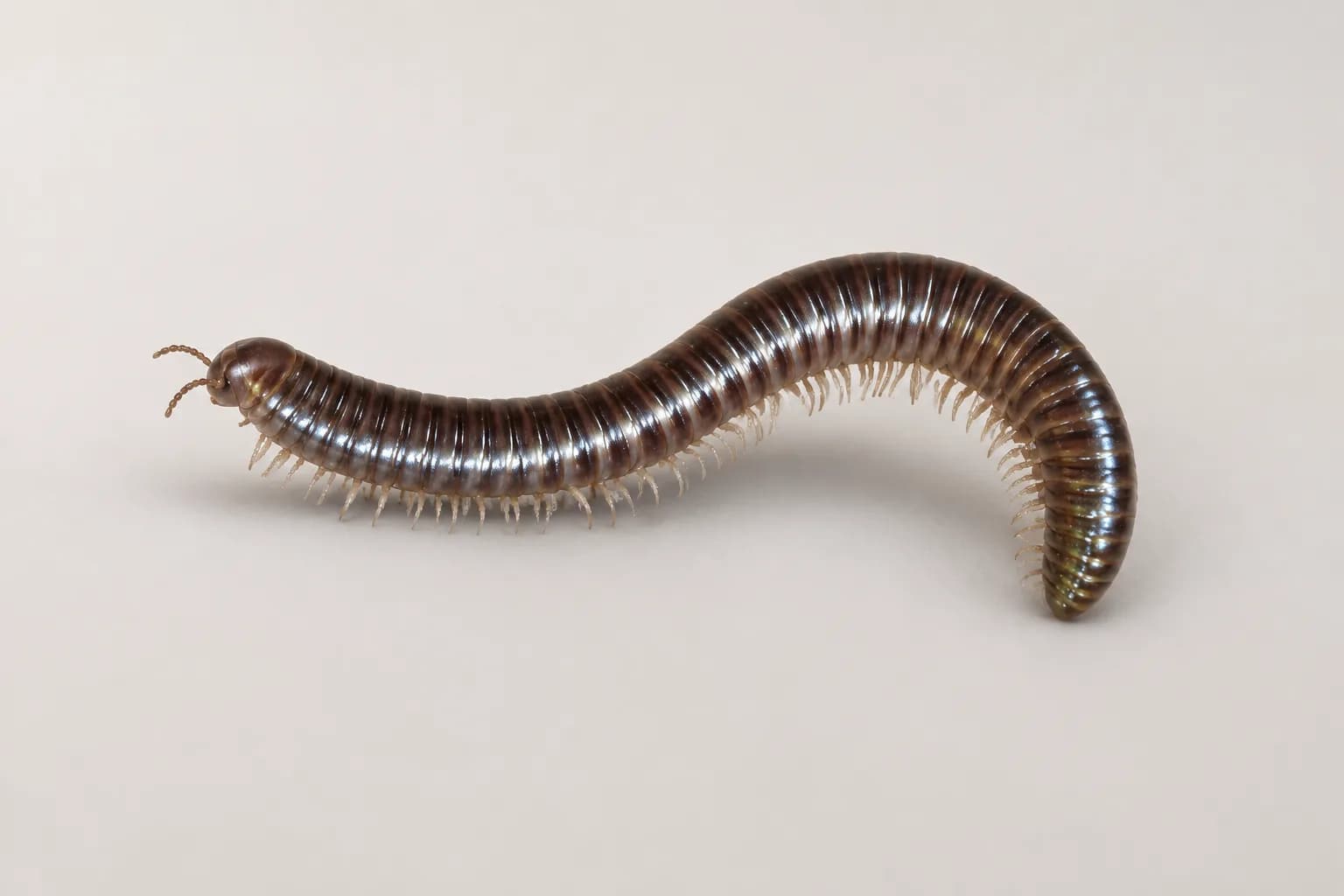
Dark brown, about 25 mm long and thin, with two pairs of short legs on each body segment. They curl into a spiral when they die.[22] Millipedes wander in from damp soil, mulch and leaf litter, often after heavy rain, and soon dry out indoors.[22][23] They are harmless.[23] Seeing a lot of them points to damp ground against the foundation, not to your pipes.
House centipedes
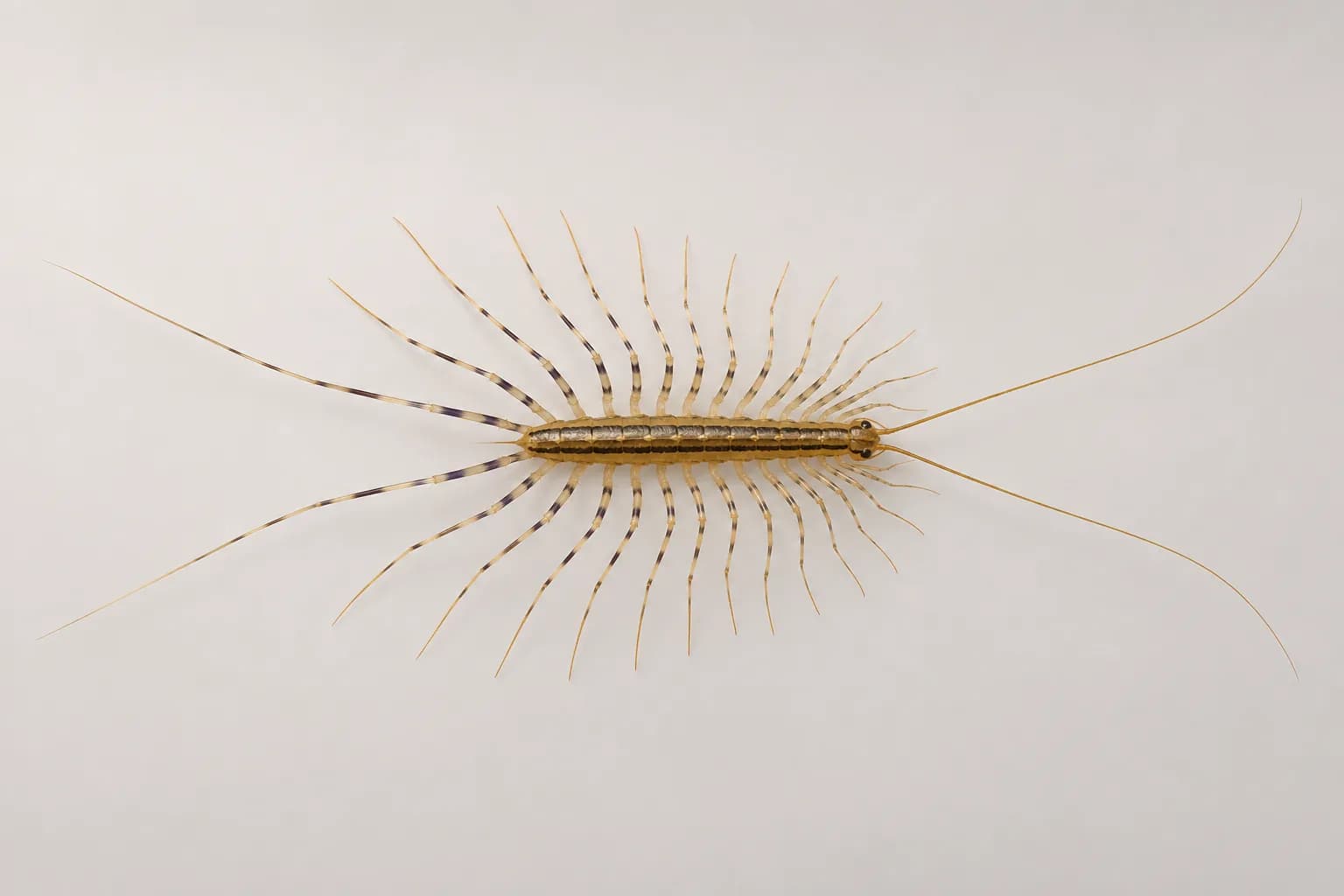
Fast, with 15 pairs of long, striped legs and a body 25 to 38 mm long.[24] They come in when drains, basements or bathrooms are too damp.[23] Penn State Extension lists floor drains without water traps among their hiding places.[24] This one has a real plumbing link: a floor drain with a dry or missing trap is an open door, and it can let sewer gas in too. Most cannot bite through skin, and a bite from the few that can feels like a mild bee sting.[23]
Silverfish
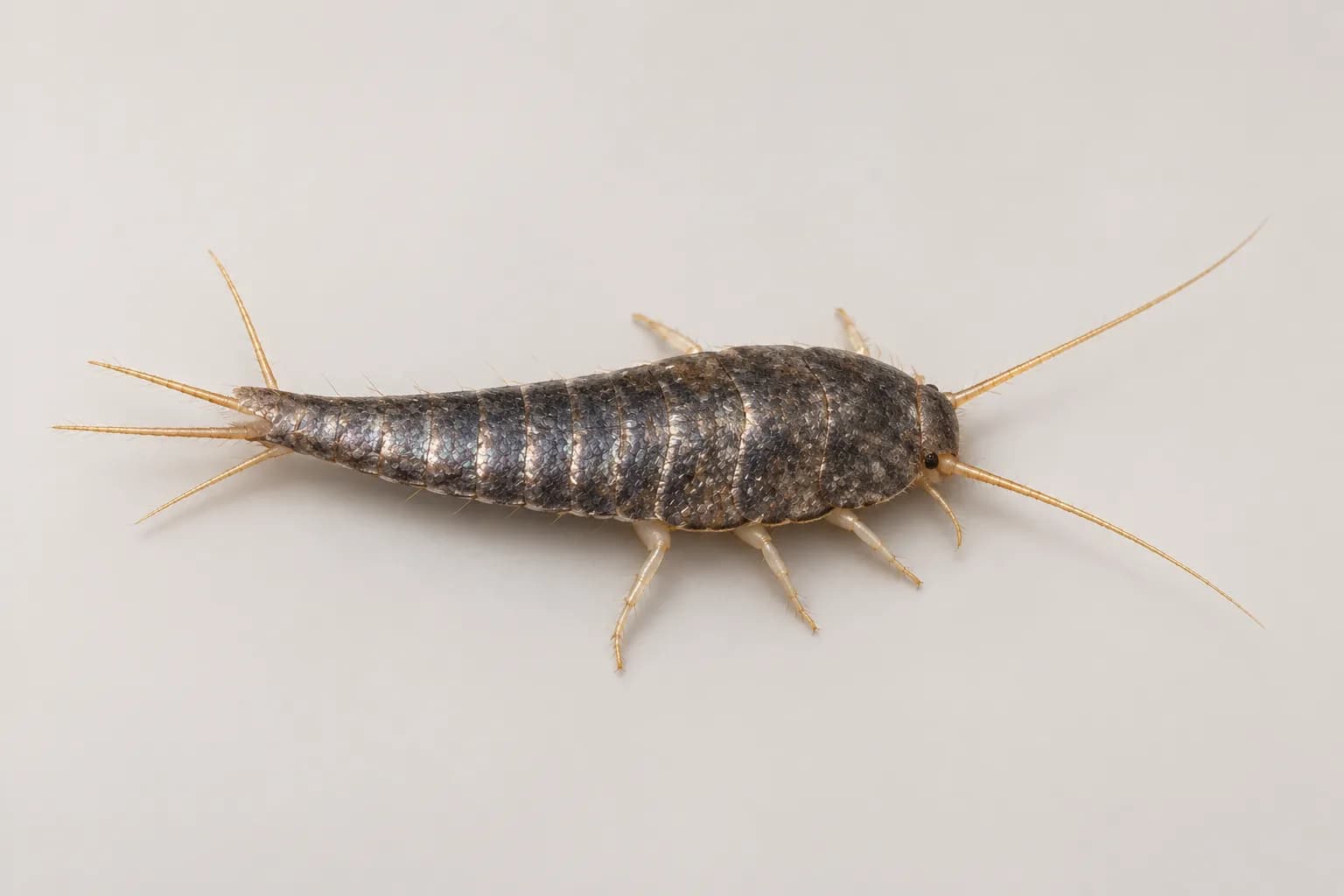
Flat, carrot-shaped and silvery, about 1 cm long, with long antennae and three tail bristles.[25] They like damp, cool places around sinks, tubs and pipes, and often get stuck in a sink or tub because they cannot climb the slippery sides.[25][26] Harmless to people. Fixing leaky taps and pipes and venting the bathroom helps keep them away.[25]
Pinworms: not from your drains
Tiny white thread-like worms in or on stool, or on toilet paper, are most likely pinworms. They live in the human gut, not in the plumbing, and are very common in young children.[27] They are about the size of a staple.[28]
This is a question for your doctor or pharmacist, not a plumber. A simple tape test confirms them and medicine treats them, often with a second dose two weeks later.[27][28] Having them does not mean anyone is dirty.[27] Our article on worms in the toilet bowl covers what else turns up there.
Getting rid of drain worms
Whatever the type, the larvae that live in drains all need the same thing: wet, rotting slime. Take that away and they cannot come back.
- Find the source. Tape over each suspect drain overnight, sticky side down, and see which one catches flies.[1][3]
- Scrub, do not just pour. A stiff drain brush down the opening, the overflow and the trap removes the slime that larvae shelter in.[3][5] If hair is part of the problem, see how to get hair out of a drain.
- Finish with an enzyme cleaner. Bacterial and enzyme products digest what the brush cannot reach.[3][1]
- Keep drains wet and moving. Run water in drains you rarely use, and fix slow drains and drips.[1]
Bleach, boiling water and harsh drain cleaners rarely solve it, because the larvae sit inside the slime, and some of these can harm pipes.[1][5][6] Our full walkthrough is how to get rid of drain worms, and why your drains smell explains the same slime from the odour side.
When to call a plumber
Call a plumber when:
- Worms or flies keep coming back after you have scrubbed and treated the drain.
- A drain stays slow, gurgles or smells like sewage.
- Swarms of tiny flies appear on the lowest floor, around floor cracks or a floor drain.
- Worms or soil keep showing up in a ground-floor toilet or floor drain.
- You see water around the base of a toilet or under a shower.
Breeding spots inside a wall, under a shower base or under a concrete floor are out of reach without the right tools. A drain camera inspection shows whether a pipe is cracked or broken, and professional drain cleaning clears the slime and buildup a brush cannot reach. If a pipe is damaged, our drain repair team explains the fix and the price before any work starts.
See also
References
- Alabama Cooperative Extension System. Drain Flies in the Home: Identification & Management (ANR-3235).
- University of Kentucky Entomology. Rat-Tailed Maggots and Moth Flies (ENTFACT-500).
- Penn State Extension. Moth Flies in the Home.
- University of Florida IFAS Extension. Drain Fly, Psychoda spp. (EENY-716).
- Utah State University Extension. Drain (Moth) Fly.
- NC State Extension. Phorid Flies.
- Virginia Cooperative Extension. Phorid Flies (ENTO-433).
- University of Maryland Extension. Phorid Fly.
- UC Statewide IPM Program. Fruit Flies.
- University of Kentucky Entomology. Fruit Flies (ENTFACT-621).
- Iowa State University Extension. Fruit, Vinegar, and Pomace Flies.
- University of New Hampshire Extension. Horsehair Worms fact sheet.
- UC Statewide IPM Program. Horsehair Worms.
- Colorado State University Extension. Weird Worms: Horsehair Worm and the Grasshopper Nematode.
- Clinical Case Reports (2025). Repeated Visits to a Woman With Suspected Worms Discharged From the Urethra: A Case Study (Cai, Xu, Xue and Hu).
- Virginia Cooperative Extension. Non-biting Midges (ENTO-438).
- City of Edmonton. Midges.
- Water 15(3):377 (2023). Paratanytarsus grimmii (Chironomidae) Larvae in Drinking Water Distribution Systems: Impairment or Disaster? (Christopher, Michels and Gunkel).
- University of Florida IFAS Extension. Drone Fly, Rat-Tailed Maggot (EENY-445).
- UC Statewide IPM Program. Fungus Gnats (Pest Note 7448).
- Purdue Extension. Fungus Gnats and Shore Flies (E-111).
- Penn State Extension. Millipedes.
- Health Canada. Centipedes, millipedes, sowbugs and pillbugs.
- Penn State Extension. House Centipedes.
- Health Canada. Silverfish and Firebrats.
- Oklahoma State University Extension. Silverfish.
- Canadian Paediatric Society. Pinworms (Caring for Kids).
- U.S. Centers for Disease Control and Prevention. About Pinworm.
Illustrations on this page are original PlumbWize images, made with reference to photographs of each species. They are not to scale. This guide is general information for homeowners, not medical advice.