You want to know where your main water shut-off valve is, and that it works, before you ever need it. If a pipe bursts, it's the first thing you'll reach for.
Here's where to find it in a Burlington, Oakville or Hamilton home, how to test it safely this fall, and what to do if it won't turn.
TL;DR
- If a pipe bursts, closing your main shut-off valve is the fastest way to stop the water flooding your home.
- Your main shut-off valve is usually in the basement, on the pipe where water enters the house, next to your water meter.
- Test it before the cold arrives: close it, open a tap, and check the water stops.
- If it's stuck, leaking or won't close, don't force it. An old valve or pipe can crack under a wrench.
Why check your shut-off valve this winter?
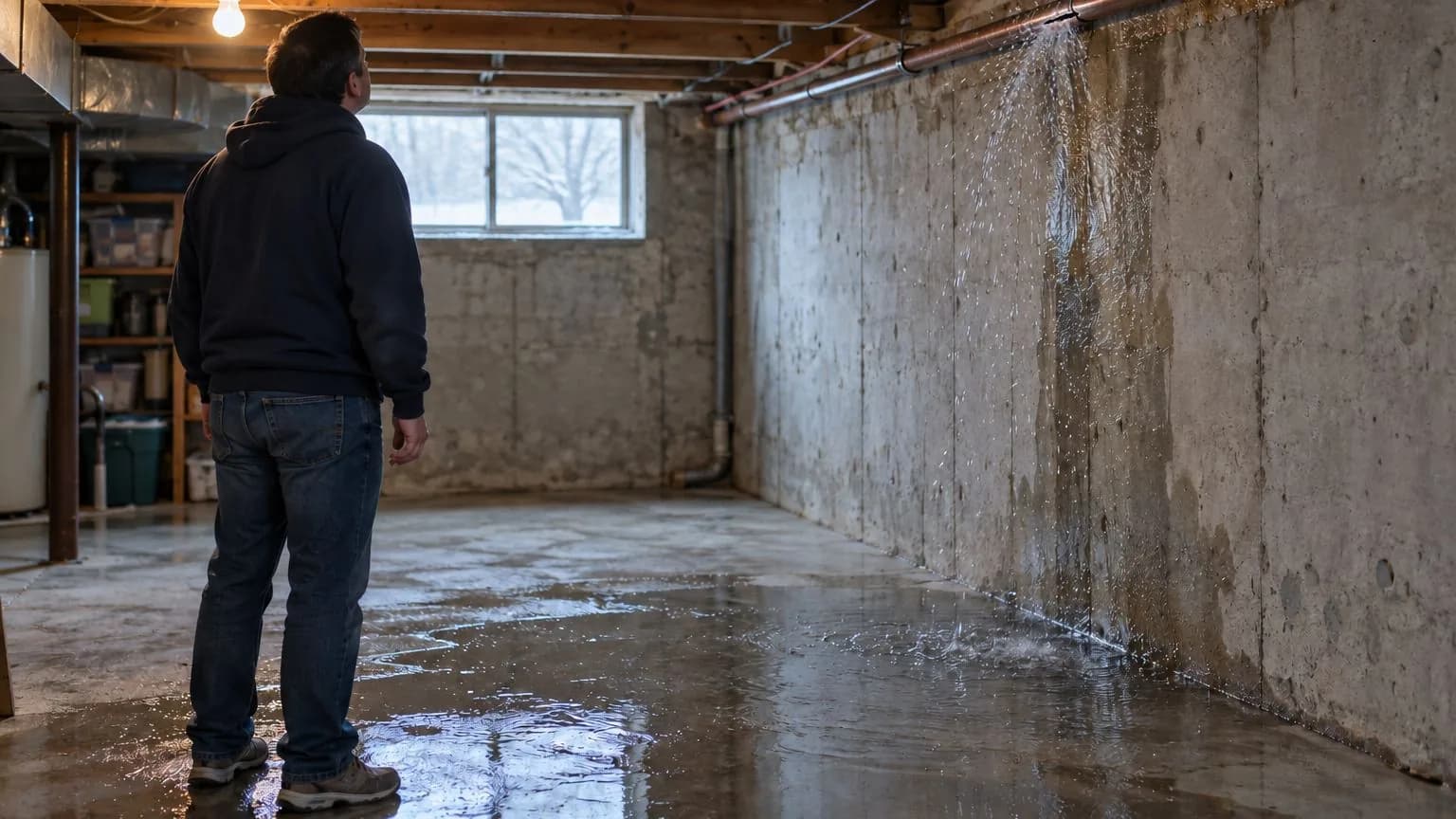
A frozen pipe can split. When it thaws, water pours out of the crack. It keeps coming until someone closes the main shut-off valve.
That's why the City of Hamilton tells homeowners to know where their shut-off valve is, and to turn off the water if a pipe bursts. In 2015, the City received over 1,200 calls from residents whose pipes had frozen.
The problem is that a main valve can sit untouched for years. An old valve can seize or stop closing all the way. You don't want to find that out with water on the floor.
Testing it now, on a dry day, tells you it will work when you need it.
A mild start to winter makes this easy to put off. The Weather Network's winter outlook for Eastern Canada has "high confidence in a very mild and potentially record-breaking December" in Ontario. But cold snaps can still happen, and winter could come back in January and February.
Where is the main water shut-off valve in my house?
In most homes here, it's in the basement where the water line comes through the foundation wall, right beside the water meter. Both Halton Region and the City of Hamilton point homeowners there.
Start at the meter. Follow the pipe back toward the wall it comes through. The valve sits on that incoming pipe, usually just before the meter. Make sure it's the main supply valve, not a small valve that serves one fixture or appliance.

It may be hidden behind a finished wall, a storage shelf or a furnace room door. Clear a path now. You don't want to move boxes during a flood.
Can't find it at all? Check under the stairs, in a laundry room or utility room, or in a crawl space. If you still can't find it, a plumber can locate it for you.
What does a main shut-off valve look like?
Most main shut-off valves in homes have a lever or a round wheel handle. The type tells you how to turn it. Its age and condition tell you more about whether it will stick.
| Lever handle (ball valve) | Round wheel handle (gate valve) | |
|---|---|---|
| How it looks | A flat lever that lies along the pipe when open | A round, star-shaped or oval wheel on a short stem |
| How to close it | Turn the lever a quarter turn, so it sits across the pipe | Turn the wheel clockwise several full turns |
| What to watch for | Usually easy to turn. Stiff after years without use. | Older ones often seize, drip at the stem or don't close fully |
If your home is older and has a wheel handle, test it gently. Older gate valves can become hard to turn or stop sealing properly. A plumber can swap one for a lever valve.

How do you turn off the water to your house and test the valve?
You turn off the water by closing the main valve, then you check that the water actually stops. Do it on a calm day, not during an emergency.
If you have an old wheel valve that hasn't been turned in years, test it on a weekday. That way you can reach a plumber if it starts to drip.

If your valve is corroded, visibly damaged or already leaking, don't test it. Have a plumber look at it first.
- Let your household know the water will be off for a few minutes.
- Turn the valve off. Use your hand only. Turn a lever a quarter turn. Turn a wheel clockwise until it stops. If it resists, stop.
- Open a cold tap on your lowest floor, such as a laundry tub or basement sink.
- Watch the tap. Water left in the pipes will run for a short time. Then the flow should stop completely.
- Turn the valve back on slowly. Then close the tap.
- Check the valve and the pipe around it for drips over the next hour.
If the flow stops, you now know exactly where to go in an emergency.
If water keeps flowing steadily after the pipes drain, even as a trickle, the valve isn't sealing. It may not stop the water if a pipe bursts. Have it checked.
What if my shut-off valve is stuck or leaking?
Stop and don't force it. A stuck valve or old pipe can crack under pressure from a wrench, and then you have a leak you can't shut off.
- It won't turn at all. The valve has likely seized from sitting unused. Leave it and call a plumber.
- It turns, but the water doesn't stop. The inside of the valve may be worn and unable to seal. It may need repair or replacement.
- It drips at the handle after you turn it. Older wheel valves often drip at the stem. Sometimes a plumber can fix this. Often replacing the valve is the better choice.
- It leaks from the body or the pipe joint. Call a plumber soon. This can get worse without warning.
To replace the main valve, a plumber usually needs the water shut off at the curb. That's the city's or region's job.
What is the curb stop, and who owns it?
The curb stop is a second shut-off valve outside your house, usually near the sidewalk or property line. It belongs to your city or region, not to you.
In Hamilton, the city says the curb valve is about three inches across and stamped HWW (Hamilton Water Works) or WATER. Homeowners are responsible for the water lines from inside the house to the property line.
In Burlington and Oakville, Halton Region is responsible up to and including the curb stop. You're responsible from the curb stop into your home, plus all indoor plumbing and keeping your water meter from freezing.
Don't turn the curb stop yourself. It's not yours to operate.
But do keep it visible. Hamilton asks homeowners to keep it visible at all times, and Halton asks you to clear snow from it. If it's buried in an emergency, crews lose time finding it.
Who do I call if I can't shut off my water?
If your inside valve is broken or won't turn and water is coming in, call your city or region right away about the curb stop. Then call a plumber.
- Hamilton (including Ancaster, Dundas, Stoney Creek and Waterdown): call the City at 905-546-2489. The City of Hamilton will do an emergency shut-off at the curb. You'll need to call back to have the water turned on again.
- Burlington and Oakville: call Access Halton at 311 or 905-825-6000 for help with your curb stop.
While you wait, stay away from water near outlets or electrical panels. Move what you can off the floor or upstairs.
Once the water is off, call our 24/7 emergency plumbing team: Burlington 905-332-8222, Oakville 905-842-6222, Hamilton 905-545-4222. For what to do next, see our guide on what to do if your pipes burst.
Should I shut off my main water valve if I'm away this winter?
Yes, if you're leaving for an extended period in cold weather. Halton Region recommends shutting off the master valve, flushing all toilets and opening a tap on the lowest floor to drain the system. It also suggests having someone check your home regularly while you're gone.
Keep the heat on while you're away. Halton recommends keeping indoor air above 12°C, especially near the water meter.
If your home has hot water (boiler) heating or fire sprinklers, ask a plumber before you shut off the water. Those systems may need water while you're away.
This is different from your outdoor taps. Those have their own small shut-off valves inside the house. Our guide on how to turn off outside water for winter covers those.
Get your valve ready before the cold arrives
A few minutes this week means you'll know exactly what to do if a pipe bursts in February. Find your valve, clear the space around it, and test it.
If it's stiff, dripping or won't stop the water, our licensed and insured plumbers can repair or replace it. We explain the price first.
If a pipe has already frozen or burst, our frozen and burst pipe team can help.