

4 Shower Drain Types to Know: A Guide for Ontario Homeowners
Selecting the right shower drain is essential for bathroom aesthetics and efficient water drainage. Whether you prefer linear drains or traditional point drains, understanding different types of shower drains will ensure your renovation plans don’t go down the tubes.
Choosing a shower drain may seem like a no-brainer, but with many options affecting aesthetic appeal, long-term maintenance, and bathroom floor integrity, picking one may require more thought than you’d think.
Whether you’re planning a full renovation or just updating a plumbing fixture, we’re here to guide you through the different types of shower drains for a functional, leak-free bathroom. We’ll cover the pros, cons, and plumbing considerations for the most common shower drain types found in residential bathrooms today.
1. Linear Shower Drains
Linear drains, which are often referred to as channel drains or trench drains, are long and narrow. They typically span the width of the shower area wall or the entrance.
| Feature | Linear Drains |
| Common Names | Channel drains or trench drains |
| Placement | Width of the shower area wall or entrance |
| Aesthetic Pros | Offers a contemporary look; allows for larger tiles |
| Maintenance Cons | Requires regular cleaning; larger area traps hair and debris |
| Installation | Requires precise floor grading toward a single edge |
| Plumbing Note | Ideal for barrier-free or “walk-in” shower layouts. |
2. Traditional Point Drains
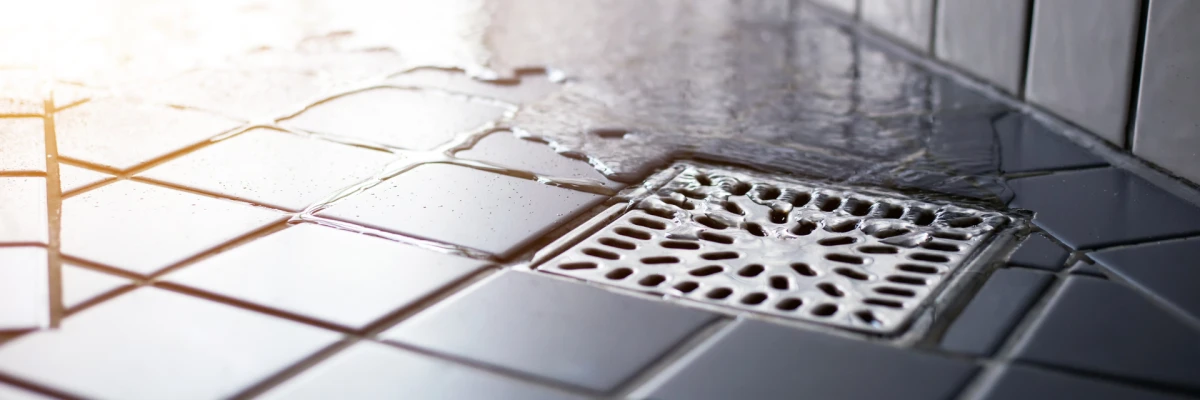
The point drain is the most common variety you’ll find in a standard shower system. It is typically located in the centre of the shower floor, requiring the floor to be sloped from all four sides toward the shower waste.
| Feature | Point Drains |
| Common Names | Traditional or centre drains |
| Placement | Centre of the shower floor |
| Aesthetic Pros | Cost-effective; compatible with various drain cover styles |
| Maintenance Cons | Requires a four-way slope, which usually limits you to smaller tiles |
| Installation | Requires a “funnel” slope from all four sides |
| Plumbing Note | Must be installed correctly to prevent sewer gases from escaping |
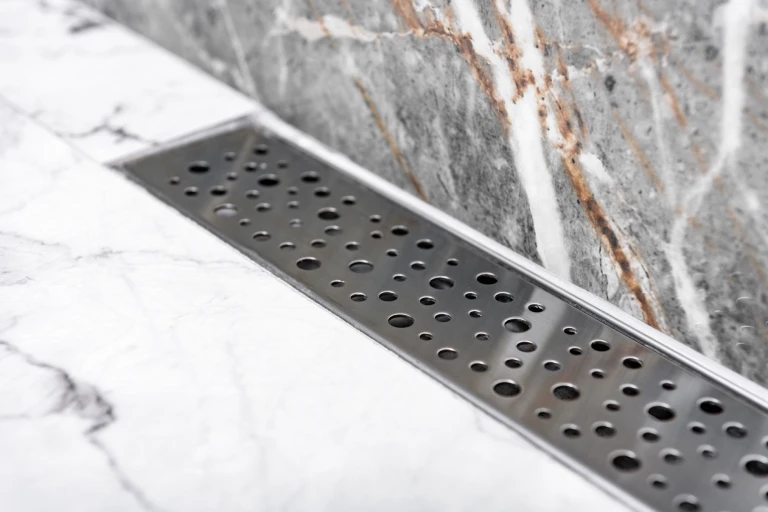
Image Source: Shutterstock
3. Decorative Drain Styles
While point and linear refer to the physical installation, decorative options focus on visual appeal and bathroom styles. Modern drain designs, such as those from Quickdrain USA or Infinity Drain, are available in various finishes, including stainless steel and matte black.
| Feature | Decorative Drains |
| Common Names | Designer grates or finish-matched drains.] |
| Placement | Can be applied to either linear or point configurations |
| Aesthetic Pros | Provides a contemporary look; matches faucets and hardware for visual appeal |
| Maintenance Cons | Intricate patterns in the drain cover may require more effort during regular cleaning |
| Installation | Requires high-quality materials, such as stainless steel, for enhanced corrosion resistance |
| Plumbing Note | Must ensure the decorative top is compatible with the internal drain body and waterproofing |
4. Tile-In (Invisible) Drains
For a seamless shower appearance, tile-in drains are the ideal plumbing fixture. These allow you to place a piece of your bathroom floor tile directly into the drain cover.
| Feature | Tile-In Drains |
| Common Names | Invisible drains or hidden drains |
| Placement | Integrated directly into the bathroom floor |
| Aesthetic Pros | Enhances aesthetic appeal for luxury shower designs |
| Maintenance Cons | Can be trickier to lift for easy maintenance |
| Installation | Requires precise tile setting to avoid impeding water flow |
| Plumbing Note | Must be set perfectly to ensure proper drainage and prevent water damage |
Key Considerations for Choosing the Right Shower Drain
When evaluating different types of shower drains, Ontario homeowners should consider several factors:
Drain Capacity and Flow Rate
A high-volume shower system needs a drain with a high flow rate to handle the water flow. Linear drains often provide a higher drain capacity than small point drains.
Maintenance
Waste buildup and hair are common causes of clogs. Choosing a shower waste system with an accessible hair catcher simplifies drain cleaning maintenance.
Waterproofing and Preventing Leaks
Proper waterproofing is the most critical part of any installation. This involves sealing the drain body against the shower tray or liner to prevent leaks into the subfloor.
Learn more: How to Install a Shower Drain
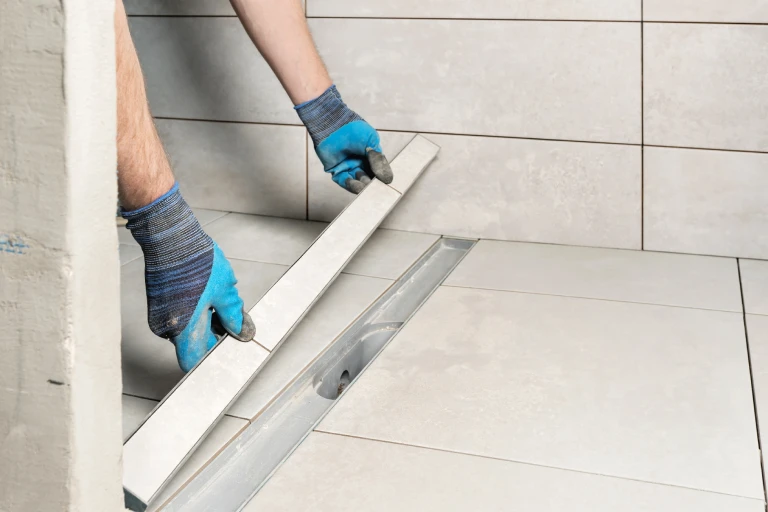
Image Source: Shutterstock
FAQs About Shower Drain Types
What are the different types of shower drains?
Are linear shower drains worth it?
What type of shower drain is easiest to clean?
Key Takeaways
- Choosing between point drains and linear drains depends on your shower floor layout and the size of your tile.
- High-volume shower systems require a drain with a high flow rate and drain capacity to ensure efficient water drainage.
- Proper installation and waterproofing are the most critical steps in preventing leaks and protecting your home from water damage.
- Linear shower drains provide a flat surface ideal for barrier-free or “walk-in” shower designs. Decorative drains enhance bathroom aesthetics but may be more complex to clean.
- Hiring a professional plumber to install your drain ensures your drainage system meets local standards and avoids costly DIY mistakes.
Trust Your Local Plumbing Experts at PlumbWize
Selecting the right shower drain is just the start. Ensuring it’s installed correctly is what prevents water from causing damage to your home.
While a DIY approach might seem tempting, professional plumbing services are always safer and more reliable. At PlumbWize, our team is ready to help you navigate shower drain types and ensure proper installation for lasting comfort and peace of mind.
Whether you’re in Oakville, Hamilton, or Burlington, we’re your local plumbing partner. Contact us today for a no-obligation quote on your next bathroom project!

Zak and Jay
OwnerZak and Jay are licensed plumbers proudly serving Burlington, Oakville, and Hamilton areas. With over 20 years of experience each, they specialize in residential and commercial plumbing solutions, including general repairs, drain cleaning, new installations, and 24/7 emergency services. As certified professionals, Zak and Jay are committed to providing reliable, honest, and high-quality workmanship. Their dedication to customer care has earned them a reputation as trusted plumbing experts in the Burlington, Oakville, and Hamilton area.

 0
0 905-332-8222