


12 Tips to Get Rid of Smelly Sink Drain Odours
Sink drain odours are usually caused by food debris, bacterial buildup, or a dry P-trap. Most smells clear up with boiling water, baking soda, or an enzyme cleaner. If the odour returns within 48 hours of cleaning, it may signal a deeper blockage or sewer gas issue.
A smelly sink drain is not only unpleasant, but it’s also a sign that your plumbing needs attention. If your kitchen drain stinks or you’ve noticed an odour coming from your bathroom, knowing how to get rid of sink smell quickly can save you from much bigger problems down the line.
In this post, we highlight potential causes of sink odours and provide 12 tried-and-true tips for getting rid of drain smell…fast and effectively.
My Sink Drain Smells Bad: What’s Causing This?
Regardless of the type of sink you have, clogs and unpleasant smells can happen. Some of the common culprits behind a stinky sink drain include:
- Food particles: Leftover food in a slow-draining sink can decompose, leading to bad smells.
- Grease build-up: Pouring grease down the drain can leave a residue that traps odours in your pipes.
- Bacterial growth: Warm, moist environments in drains are ideal for bacteria, leading to foul odours.
- Dry P-trap: A dry P-trap allows sewer gases to enter the home, causing unpleasant odours.
Whatever the culprit, rest assured, there are ways to eliminate bad sink smells.
12 Effective Methods to Eliminate Sink Drain Odours
Act fast whenever your kitchen sink drain smells bad! While it may not seem as urgent as a leaky sink, it can cause major problems over time. Here are 12 battle-tested methods to deodorize your drain today.
1. Flush with Boiling Water
A simple boiling water flush can work wonders for mild odours! Here’s what you can do:
- Bring a kettle (or pot) to a boil.
- Slowly pour boiling water down the smelly sink drain.
- Repeat once more after 10 minutes if you feel the first round wasn’t effective.
- Use this weekly to prevent grease, food buildup or lingering odours.
2. Lemon Juice and Baking Soda
Good news, you can effectively combat smelly drains with both of these handy household items:
- Sprinkle ¼ cup of baking soda into the drain.
- Add juice from half a lemon.
- Let it sit in the drain for ~15 minutes.
- Flush with boiling water.
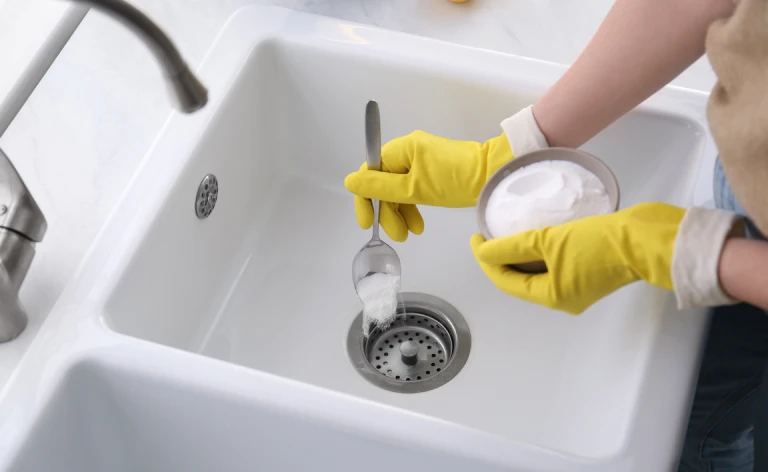
Image source: Canva
3. Salt and Ice Cubes
If you have a garbage disposal, ice and salt can sometimes work to “scrub” any debris and residue out of your kitchen sink drain:
- Add a handful of ice cubes to your drain.
- Sprinkle coarse salt over them.
- Run the disposal for ~30 seconds.
- Rinse with hot water.
4. Clean the P-Trap
If your sink smells persistently, you may need to clean the P-trap more routinely or address and eliminate a clog. Try this:
- Place a bucket under the sink.
- Unscrew the P-trap carefully.
- Remove gunk and rinse with hot water.
- Reattach securely.
5. Baking Soda and Vinegar
This is a classic, powerhouse combination for clogged drains and sinks that often helps with deodorizing and unclogging, without using any harsh chemicals:
- Pour ½ cup of baking soda into the train.
- Follow with one cup of white vinegar.
- Let it fizz and foam for 15 minutes.
- Rinse with hot water.
6. Use Bleach
Sometimes, stinky drain odours require stronger solutions, especially if mould is present. Be sure to be cautious when using bleach, and do not combine it with other chemicals:
- Mix 1 tablespoon of bleach with 1 litre of water.
- Pour it (slowly) into the smelly sink drain.
- Let it sit for approximately five minutes.
- Rinse with cold water.
7. Install a Drain Screen
Purchasing a drain screen (found at most Canadian hardware stores) is a proactive measure that can prevent many common plumbing issues. While this isn’t a solution for a drain that currently stinks, it’s a great way to prevent not only smells but food and hair that can clog your pipes.
8. Try a Drain Snake
For deep, stubborn blockages (especially hair and toothpaste in slow-draining bathroom sinks), it’s recommended to call a plumber for a professional drain camera inspection. If you suspect the drain clog isn’t too serious, a manual snake tool from your local hardware store should do the trick.
- Insert your snake tool into the drain.
- Twist to catch debris and buildup.
- Pull out and dispose of.
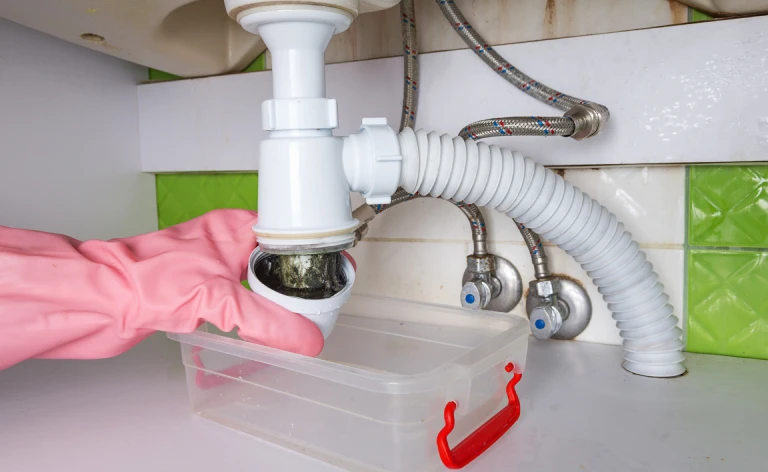
Image source: Canva
9. Use Enzyme Cleaners
Enzyme-based cleaners can break down organic matter, such as food particles and soap scum. We recommend that you search for eco-friendly products safe for your community’s plumbing system.
- Purchase an enzyme-based cleaner, preferably one designed to break down organic material in (smelly) drains.
- Clearly read and follow the label instructions for the recommended amount and application.
- Pour the cleaner down the drain.
- Let it sit overnight, then flush with warm water the next day.
10. Check for a Dry P-Trap
Your P-trap may be too dry, not clogged. This issue can cause sewer gas to flow through your pipes. Running water for 1-2 minutes can easily resolve this issue.
11. Dispose of Grease Properly
Never pour hot oil or grease down your drain! Instead:
- Pour any grease into a container.
- Let it solidify, then discard.
- Note that even if your sink seems fine, this is a great proactive measure.
12. Call a Professional
If you’ve tried all the above tips and your smelly sink drain persists, it may be time to get expert help! Plumbing issues, such as sewer line backups or deeper clogs, may require emergency plumbing services from your local trusted plumber.
When Sink Drain Smell Signals a Bigger Problem
Sometimes a foul-smelling sink just means you need to clean the basin, but other times it can indicate underlying issues. Unfortunately, DIY solutions won’t help you here. Call a professional plumber if you notice that the:
Smell Comes Back up in Less Than 48 Hours
You can’t remove biofilm buildup or partial blockages inside the pipes with just surface-level cleaning. Repeated flushing also won’t resolve it. You can try using an enzyme cleaner once or twice, but overusing it will inadvertently do more damage.
Sink Gives off a Sulphur Smell
Sewer gas might smell like sulphur or rotten eggs. The most common causes include a dry P-trap, a cracked vent pipe, and poor ventilation. You’ll notice that running water down the drain only fixes the issue temporarily.
| Warning: Sewer gas (hydrogen sulphide) is a health concern. Do not attempt to fix a cracked vent stack without the proper training or equipment. You’ll need the support of a professional drain cleaning expert. |
Bad Odour Is Coming From Multiple Fixtures
If multiple fixtures are giving off a bad smell, you might have an issue with your main drain line or vent stack. DIY solutions can’t fix system-wide problems. It’ll require a sewer camera or a vent check to pinpoint the issue.
Only One Sink Is Persistently Smelly
Localized issues aren’t necessarily easier to fix. They often stem from grease buildup, food debris, and P-trap contamination, all of which are hidden deeper inside your pipes.
Don’t risk your and your household’s health with DIY fixes. Schedule for drain cleaning services ASAP to prevent these issues from spreading throughout your living space.
FAQs About How to Make Sink Drain Smell Better
How can I get my sink to stop smelling?
Why do my drains smell like sewer?
Can I pour bleach down the sink to get rid of the smell?
Why should you never use baking soda and vinegar to unclog a drain?
Is bleach or vinegar better for drains?
How do I get rid of the overflow smell in my sink?
Emergency Drain Help? We’re On It!
Sink smells are unpleasant, but common. When your kitchen sink drain smells bad and nothing seems to work, it’s time to bring in the pros!
At PlumbWize, we offer emergency plumbing services in Hamilton, Burlington, Oakville, and the surrounding areas. Our team knows exactly how to get rid of sink smells and stop plumbing problems before they worsen.
Don’t let your clogged, smelly sink issues linger. Contact us today to get a quote on our affordable, efficient clogged-drain and sink repair services.

Zak and Jay
OwnerZak and Jay are licensed plumbers proudly serving Burlington, Oakville, and Hamilton areas. With over 20 years of experience each, they specialize in residential and commercial plumbing solutions, including general repairs, drain cleaning, new installations, and 24/7 emergency services. As certified professionals, Zak and Jay are committed to providing reliable, honest, and high-quality workmanship. Their dedication to customer care has earned them a reputation as trusted plumbing experts in the Burlington, Oakville, and Hamilton area.

 0
0 905-332-8222