
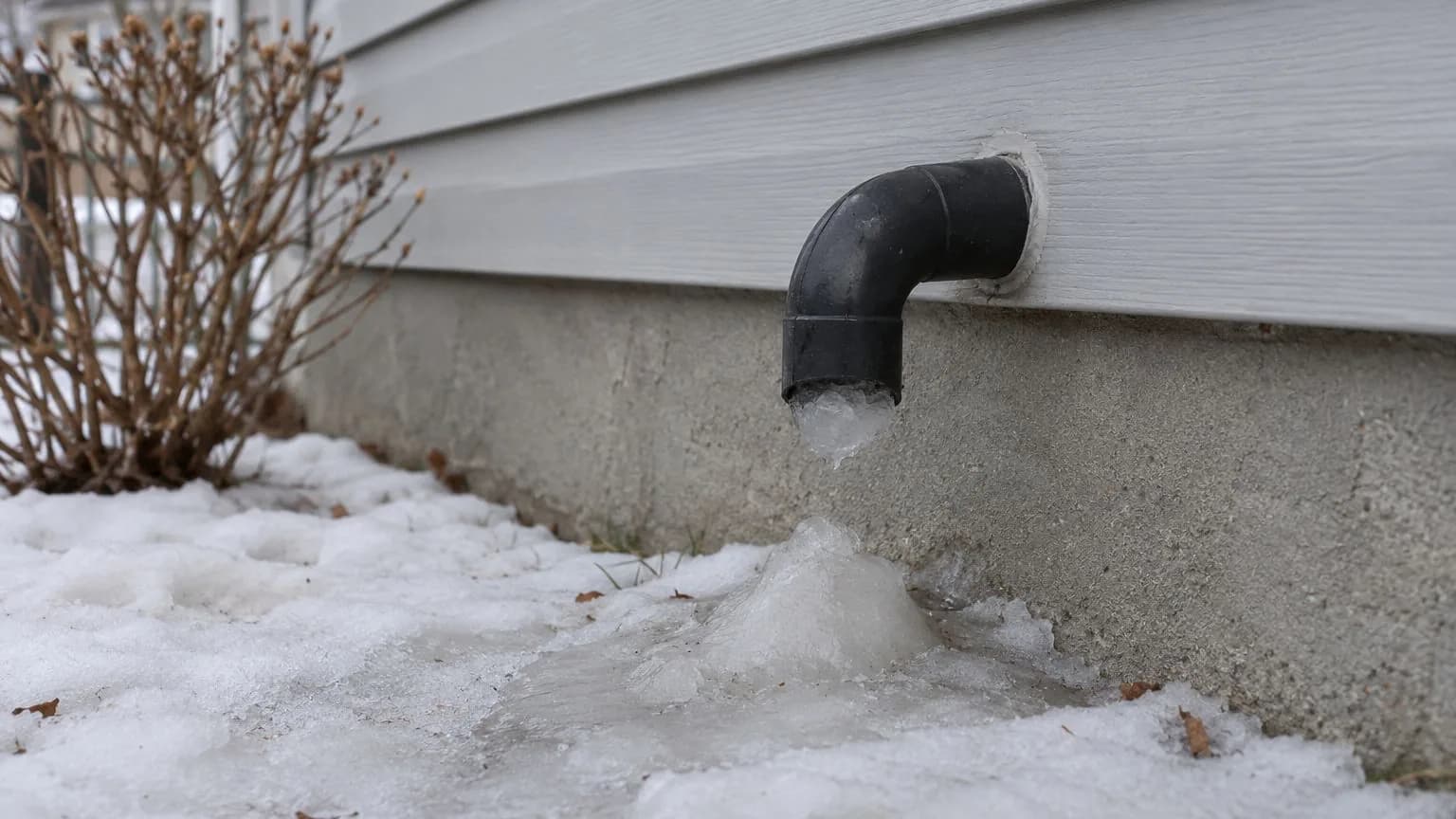
Your sump pump is running, but no water is coming out of the pipe outside. It's below zero, and you want that water leaving your basement again before the pit fills up.
A frozen sump pump discharge line is a likely cause. Here's how to tell, what to do today, and how a plumber stops the line freezing again in a Burlington, Oakville or Hamilton home.
Is water already on your basement floor? Call our 24/7 emergency team: Burlington 905-332-8222, Oakville 905-842-6222, Hamilton 905-545-4222.
TL;DR
- If the pump runs but the pit water stays high and nothing comes out outside, the discharge line may be frozen or blocked. A plumber can rule out other pump problems.
- A blocked line can overflow the pit, and the pump can overheat and fail. A battery backup usually won't help, because in most homes it pumps into the same pipe.
- Don't send the water to a floor drain or laundry tub, and don't use a flame or boiling water on the pipe.
- The line freezes because water sits in it. The lasting fix is a discharge line built so water drains out of the sections exposed to the cold.
How Do You Know If Your Sump Pump Discharge Line Is Frozen?
The clearest sign: the pump runs and nothing comes out outside. The discharge line is the pipe that carries water from the pump to your yard. When ice blocks it, the water has nowhere to go.

Look and listen. Don't reach into the pit.
| What You Notice | What It Likely Means |
|---|---|
| The pump runs, the pit stays high, and you can see ice or packed snow at the outlet | Most likely a frozen or blocked line |
| Ice built up around the outlet, or the outlet buried in a snowbank | Water has been freezing there with each cycle |
| The pump runs, the pit stays high, and the outlet looks clear | Ice deeper in the line, or a pump problem |
| The pump hums without moving water | A blocked line, or a fault in the pump or its valve |
Freezing weather makes an ice blockage more likely, but a pump or valve problem can produce the same symptoms.
A pump that won't start at all is a different problem. Our guide on how to test a sump pump covers that.
What Happens If the Discharge Line Freezes?
Two things can go wrong: the pit overflows, and the pump fails.
Groundwater keeps flowing in winter. Mild spells, rain on snow and the freeze and melt swings of late winter all send water to your foundation. If none of it can leave, the pit fills and spills onto your basement floor.
The pump is at risk too. A pump that runs non-stop against a blocked line can overheat and fail. Then you have a frozen line and a dead pump.
Will a Battery Backup Pump Save You?
No, not from a frozen line. A backup pump protects you when the power goes out or the main pump fails. But in most homes it sends water out through the same discharge line. If that line is frozen, the backup is blocked too.
A backup is still worth having for outages. See Do I Need a Sump Pump Battery Backup?
What Should You Do If the Pump Runs but No Water Comes Out?
Keep yourself safe, check the outdoor end, and get help before the pit fills.
- Stay safe around water and power. If water is near an outlet, a cord or your electrical panel, don't walk into it or touch the pump.
- Check the outdoor end of the pipe. Clear away snow or loose ice covering the outlet. Sometimes that's the whole blockage. Don't chip ice stuck to the pipe.
- Stop a pump that runs without moving water. Switch it off at a plug or breaker you can reach from a dry spot. Never step into water to do it. A pump left running against a blockage can be damaged.
- Call for urgent help. With the pump off, the pit keeps filling. Call the emergency number for your city, listed above.
- Move what you can off the basement floor.

Can You Thaw a Frozen Discharge Line Yourself?
We highly recommend you get a licensed plumber to clear it.
The ice is often inside a section you can't see or reach. The pump also needs checking after it has run against a blockage.
Some quick fixes cause bigger problems than the ice:
- Don't use a torch, a flame or boiling water on the pipe. Plastic pipe can crack or melt.
- Don't pour salt, antifreeze or chemicals into the pit or the line. They end up on your lawn and in the ground.
Can You Redirect the Sump Pump to a Floor Drain in Winter?
No. Don't redirect your sump pump into a floor drain or laundry tub. These often connect to the sanitary sewer, and an improper connection can cause drainage and flooding problems.
Halton Region, which covers Burlington and Oakville, tells homeowners in its flooding prevention guide to make sure sump pumps are disconnected from the wastewater system. Its sump pump subsidy is for pumps that discharge outside the home and overland, away from the foundation.
Why Does My Sump Pump Discharge Line Keep Freezing?
It freezes because water sits in the line between pump cycles. When the outdoor sections drain out, they're far less likely to freeze shut.

These are the usual reasons water stays in the line:
- A flat run or a low spot. Water collects in the dip.
- A long extension hose. Flexible hose sags and holds water along its length.
- A buried or blocked outlet. Snow, ice or leaves at the end hold water back.
- A long stretch of pipe in the open air. The more pipe outside, the more time water has to freeze.
Should You Disconnect the Discharge Hose Before Winter?
Often, yes, if your pump uses a removable extension hose. The City of Hamilton says that if your pump runs in freezing weather, it's best to disconnect outside hoses before winter. That helps stop blockages forming in the hose, which could damage the pump.
The water still has to land away from your foundation once the hose is off. Ask a plumber how to set that up for your yard before the first freeze.
Does Insulation or Heat Cable Stop It Freezing?
Not on their own. Insulation slows freezing, but water that sits in a pipe still freezes on a long cold night.
Heat cable (also called heat tape) can help on a short stretch that can't be changed. It stops working in a power outage. It also has to suit the pipe. Have a licensed professional choose it and install it to the product's instructions.
How Does a Plumber Stop the Line Freezing Again?
A plumber can correct the drainage so water doesn't sit in exposed sections. Depending on the setup, they may also add a freeze-relief fitting. That can include:
- Correcting the slope so the pipe runs downhill. Yes, it should slope away from the house, with no dips.
- Replacing sagging hose with rigid pipe.
- Shortening the exposed run. A line buried below the frost line can help, if the route, the slope and the outlet are designed for it. It may need your municipality's approval.
- Adding a freeze guard (freeze relief fitting) near the house. This opening lets water escape if the line beyond it is blocked, as a temporary overflow and not the normal outlet. A plumber must position it where overflow water can drain safely. Ask about it if your line has frozen before.
- Moving the outlet to a spot that stays clear of snow.
Where Should Sump Pump Water Go in Winter?
Onto your own lawn or garden, away from your foundation, unless your municipality has approved a storm sewer connection. The Government of Canada's sump pump guidance says the pipe should discharge at least 1.5 metres (5 feet) from your foundation if possible, onto an area with good drainage.
Keep it off sidewalks, driveways and the road, where it turns to ice. Keep it off your neighbour's property too.
Local rules add to this. In Burlington, a new sump pump needs a permit, and the City's Engineering Services team reviews where the water will discharge. Check with your municipality before you move an outlet.
Get Your Discharge Line Ready Before the Next Freeze
You want to hear the pump start in February and know the water is leaving. A line that drains properly makes that far more likely.
For the rest of your yearly checks, see our sump pump maintenance guide.
Our licensed and insured plumbers work on sump pumps across Burlington, Oakville and Hamilton. We check the pump and the discharge line. Then we explain the work and the price before we start.