
Your pipe froze. Now the water is running again, and you want to know if the pipe is damaged. You want to find out today, not when a stain shows up on the ceiling.
A pipe damaged by freezing may not leak until it thaws. And the leak can sit behind a wall or above a ceiling, where you can't see it.
Here's how to check your Burlington, Oakville or Hamilton home for the signs, where to look first, and when to have a plumber test the pipe. Is the pipe still frozen? Start with our frozen pipes guide.
TL;DR
- A pipe that froze can crack. The crack may not leak until the ice melts and water flows again.
- Stay away from water near outlets, wiring or your electrical panel.
- Look at the spot that froze and the floor below it. Check for drips, damp drywall, a ceiling stain, peeling paint or warped flooring.
- Turn off every tap and appliance that uses water, then look at your water meter. If the small indicator moves, water is running somewhere.
- Found water? Close your main shut-off valve if you can reach it safely, and call a plumber.
- A dry check doesn't prove the pipe is fine. Has it frozen more than once, or does it run inside a wall? Have a plumber check it.
Why Can a Frozen Pipe Leak After It Thaws?
Water expands as it freezes. The Town of Georgina says this expansion puts significant pressure on pipes, metal or plastic, and can cause them to crack or burst.
While the pipe is frozen, ice can block it, so little water reaches the crack. Then the ice melts, and the water gets through.
A small crack may only drip at first, so you may see nothing right away. That's why the City of Guelph tells residents to watch for leaks after a pipe thaws.
What Are the Signs of a Burst Pipe You Can See?
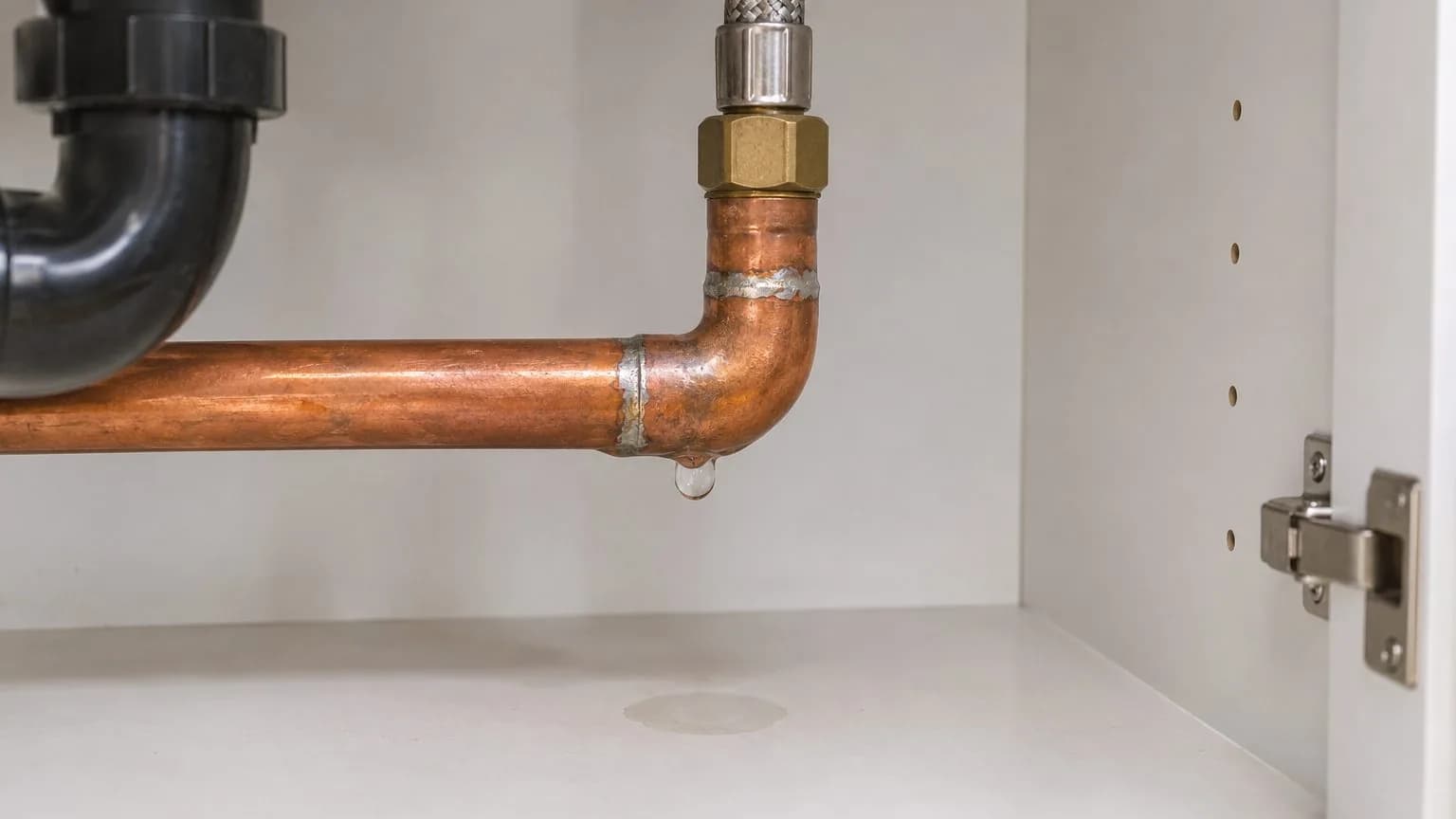
You'll see water, or the marks water leaves, near the pipe that froze or below it:
- Drips or a puddle under the pipe, inside a sink cabinet or on the basement floor
- A damp patch on the drywall
- A new stain on the ceiling of the room below
- Paint that bubbles or peels
- Flooring that lifts or warps

You may also notice a musty smell.
Health Canada lists peeling paint, warped wood and musty odours as signs of too much moisture. These signs tell you something is wet. They don't tell you which pipe is leaking.

Don't wait on them. Health Canada says mould begins to grow in a damp area within 48 hours.
What Are the Signs of a Leak You Can't See?
Possible clues include the sound of running water, a weaker tap and a meter that moves when no water is in use. You may notice only one, or none.
Listen. Turn off every tap and every appliance that uses water. Stand near the spot that froze. Do you hear water running or hissing inside the wall? Then water is moving somewhere.
Check the pressure. Does a tap run weaker than it did before the freeze? Water may be escaping before it reaches that tap. Treat it as a clue. Low pressure has other causes too.
Check your water meter. With everything still off, look at the meter.
- In Burlington and Oakville, Halton Region says you might have a leak if the low-flow indicator or the sweep hand moves while you're not using water. On a Neptune digital meter, a flashing flow indicator means water is running slowly.
- In Hamilton, the City says to find the trickle indicator, a small red or black triangle on the meter. If it turns, moves or shakes, you have a leak somewhere.
Your meter may look different. If it has a digital display, look for a flow or leak indicator while everything is off.
The meter tells you water is running. It doesn't tell you where. A toilet that keeps running moves the meter too, so check your toilets first.
The meter has limits. It only measures water that passes through it, so it won't show a leak in a drain pipe.

How Urgent Is Each Sign?
| Sign | What It Likely Means | How Urgent |
|---|---|---|
| Water dripping or spraying from a pipe | An active leak | Now. Close the main valve if you can reach it safely, then call |
| New ceiling stain or damp drywall near the frozen spot | A possible leak inside the wall or ceiling | Now. If it's dripping or spreading, close the main valve if you can reach it safely, then call |
| Meter indicator moves with every tap and appliance off | Water is running somewhere in your home | Check your toilets. Still unexplained? Call now, and close the main valve if you can reach it safely |
| Sound of running water with every tap and appliance off | Water may be moving through a leak you can't see | Call now. Close the main valve if you can reach it safely |
| Weaker pressure at one tap since the freeze | A possible leak, or another cause | Today. Call a plumber for advice |
| Peeling paint, warped flooring or a musty smell | Moisture from a source you need to find | Today. Mould can start within 48 hours |
| No signs, but the pipe has frozen more than once | You can't rule out damage by looking | Arrange a check soon |
Where Should You Look First?
Start at the spot that froze. Then check below it, because leaking water runs down.
Stay safe while you look. Don't touch wet surfaces or walk through water near outlets, wiring or your electrical panel.
- The pipe itself. If you can see it and the area is dry, wipe a dry paper towel along the pipe and its fittings. A wet towel means moisture a plumber should check.
- The wall and floor around it. Look for damp patches on the drywall. Check inside the sink cabinet and along the baseboard.
- The room below. Look at the ceiling under the frozen spot, and the basement floor under that.
- The wall behind an outdoor tap. If your outdoor tap froze, look at the indoor side of that wall and the pipe that leads to it. Look again the first time you run that tap.
Seen a warning sign? Don't wait. Seen nothing? Look again tomorrow, because a slow drip takes time to show.
Keep one limit in mind. A dry pipe and a still meter don't prove the pipe is undamaged.
What Should You Do the Moment You Find Water?
Close your main water shut-off valve if you can reach it safely, then call a plumber. Can't reach it without walking through water? Stay out and call.
The City of Hamilton advises turning the water off slowly. Is water near outlets or your electrical panel? Halton Region says to shut off your electricity only if it's safe to do so.
For the full steps, see what to do if your pipes burst.
Should a Plumber Check a Pipe That Shows No Leak?
Often, yes. Two common reasons: the pipe has frozen more than once, or it runs inside a wall where you can't see it. In either case, we highly recommend you have a licensed plumber check it.
You may worry that a check means opening walls. We use non-invasive leak detection to help locate a suspected leak. That may help limit how much of your wall or ceiling has to be opened.
If the same pipe freezes every winter, find out why it keeps freezing too. A repaired pipe in the same cold spot can freeze again.
Does Home Insurance Cover a Burst Frozen Pipe?
Often, but with conditions.
The Insurance Bureau of Canada says standard home policies cover the damage that results from frozen and burst pipes, provided the pipes are in the heated part of your home and you took reasonable steps to keep the heat on. Most policies exclude this damage if the home is vacant.
Read your policy or call your insurer. Our guide to home insurance and plumbing damage covers more.
Find the Leak While It's Small
You don't have to wait for a ceiling stain to learn if your pipe is damaged.
Is water leaking right now? Call our 24/7 frozen and burst pipe team: Burlington 905-332-8222, Oakville 905-842-6222, Hamilton 905-545-4222.
No leak in sight, but you're not sure about that pipe? Our licensed and insured plumbers can check it for leaks and explain the price before any work begins.